What Is Scarring Hair Loss? Types, Causes, Symptoms, and What You Need to Know

Compare hair transplant clinics before you commit
Get clinic options, pricing guidance, and recovery expectations from Envoy Health before taking the next step.

Key Takeaways
- Scarring hair loss or cicatricial alopecia occurs when the hair follicular stem cells are damaged either as a result of direct immune attack or a result of damage to scalp tissue due to external factors. The loss of hair follicle stem cells is permanent, and hair regrowth is not possible.
- Scarring alopecia is not contagious and typically presents with smooth, shiny scalp skin, often starting with patchy hair loss and a reddened, tender, scaly scalp. The itchy, scaly scalp shows pustules and blisters, with a burning sensation and a discharge of blood and pus. The hair-loss areas gradually lose visible follicular ostia (pores) and appear shiny.
- Dermatologists, trichologists, or hair care experts diagnose the condition after a physical examination, along with information from medical history, blood tests, and a hair pull test. Regrowth is impossible, but the cure relies on regulating inflammation and preventing further damage to hair follicles.
Still worried about pain or recovery?
Most discomfort depends on technique, graft count, anesthesia, and aftercare. Envoy can help you compare clinics that explain the pain-management plan up front.
Scarring Hair Loss Meaning
Scarring hair loss is permanent and occurs when hair follicles are irreversibly damaged and replaced by fibrous scar tissue. Damage to healthy hair follicles, either due to infection, burns, or autoimmune diseases, leads to a deep-seated inflammation and trauma, causing irreversible damage. Unlike with routine hair loss, regrowth does not occur because the destroyed follicles cannot produce hair, leading to permanent baldness. Cicatricial alopecia, the scarring hair loss medical term, is an umbrella term for a group of rare disorders. Compared with non-scarring hair loss, cicatricial hair loss is relatively rare. Among 3,000 case study diagnoses, scarring alopecia accounted for 27% of cases, with non-scarring alopecia the most common at around 73%. [1]
What Does Scarring Alopecia Look Like?
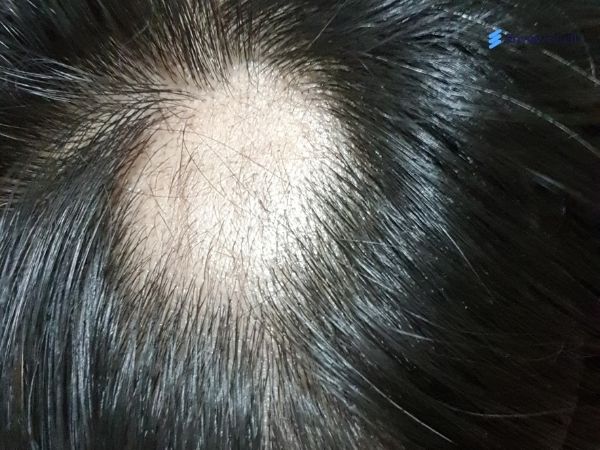
Scarring alopecia presents as patchy hair loss on the scalp and other hairy areas of the body, often accompanied by itching, discomfort, and tenderness. Early stages are marked by redness, pustules, blisters, and scaly skin around the hair follicles. Later stages present with patchy hair loss, with either slow or rapid progression. The final stages are marked by a shiny, smoother scalp with no visible pores.
Scarring Hair Loss vs Non-Scarring Alopecia
Scarring alopecia cannot be confused with non-scarring alopecia. While the fundamental difference centers on hair follicle survival, certain visual and clinical signs help differentiate the two conditions.
Comparison of Scarring versus Non-Scarring Hair Loss
|
Feature |
Scarring alopecia |
Non-scarring alopecia |
|
Hair follicle condition |
Hair follicle stem cells destroyed |
Follicular shrinkage or enter a resting phase |
|
Extent of damage to hair follicles |
Irreversible damage to follicles |
Temporary phase, typically reversible |
|
Causes |
Inflammation due to physical injury, trauma, burns, and autoimmune conditions |
Genetics, hormonal shift, nutritional deficiencies, and high stress |
|
Physical appearance |
No visible follicular openings with a smooth, shiny scalp, often accompanied by redness, pustules |
Normal textured scalp with visible follicles, accompanied by thin hair and a widening of the part |
|
Symptoms |
Severe itching, scalp tenderness, blisters, and a burning sensation |
Typically, no pain or physical discomfort |
|
Diagnosis |
Clinical evaluation and scalp biopsy |
Physical examination, pull test, and blood tests |
|
Treatment goals |
Addressing underlying inflammation |
Stimulating dormant hair follicles and preventing further shedding |
What are Scarring Hair Loss Types?
The two main types of scarring hair loss include primary and secondary cicatricial alopecia.
Primary Cicatricial Alopecia
Hair loss conditions in which hair follicles are the primary target of destructive inflammation fall under this category. The damaged hair follicles are replaced by fibrous scar tissue, making regrowth nearly impossible. Here are a few types, depending on the inflammatory cells involved in the follicular attack.
- Lichen planopilaris (LPP): Appears as reddened patches around the hair follicles, and these grow in size. Patients experience severe itching and persistent scalp discomfort. Women aged 30 to 60 years are more prone to LPP than men.[2]
- Frontal fibrosing alopecia (FFA): A LPP variant often associated with a receding frontal hairline and a partial or complete loss of eyebrows. The skin at the edges of the receding portion appears red, bumpy, and scaly. Studies suggest that the incidence of this rare issue is increasing.[3] FFA is more common in postmenopausal women around age 60 years and less common in men.[4]
- Central centrifugal cicatrical alopecia (CCCA): Noticeable hair loss on the crown, spreading outward to the scalp, often associated with itching, burning, soreness, and burning sensation. Genetics and certain hair grooming practices are the known and well-understood causes. The American Academy of Dermatology states that a study conducted by the Black Women’s Health confirms the role of family history in African women suffering from CCCA.[5]
Secondary Cicatricial Alopecia
This type covers scarring hair loss conditions in which hair follicle destruction is a by-product of generalized damage rather than targeted destruction.[6] This means that, unlike primary scarring alopecia, which directly targets hair follicles through autoimmune factors, secondary cicatricial alopecia results from external factors. These include physical damage to the scalp due to lacerations, surgical scars, deep scrapes, thermal or chemical burns, tumors, and high-dose radiation on the neck and head areas. The scalp tissue heals, but the natural tissue architecture is replaced by fibrous scar tissue, leaving the follicular stem cells inactive.
What Are the Scarring Hair Loss Causes?
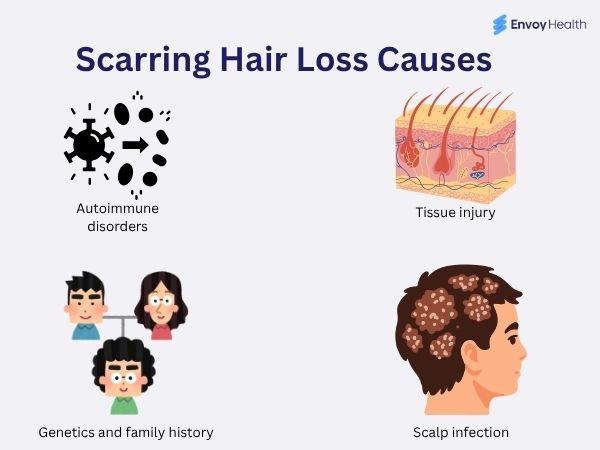
The four main scarring hair loss causes include:
- Autoimmune disorders such as lichen planopilaris, frontal fibrosing alopecia, discoid lupus erythematosus, folliculitis decalvans, scleroderma, and other forms of blistering diseases triggers immune response that damages the middle portion of the hair follicles. This part of the hair follicle contains oil glands and stem cells, which are responsible for hair growth.
- Tissue injury and trauma leading to the structural damage of hair follicles. Most common reasons include deep cut lacerations, radiation, sunburns, chemical burns, radiation therapy, and chronic physical tension due to tight, excessive styling.
- Genetics acts as a predisposition factor in some individuals to develop scarring hair loss. A few individuals with specific family history develop abnormal sensitivity to hormones, immune attacks, and structural challenges.
- Severe scalp infections caused by bacteria and fungi, causing inflammatory pimples leading to pus formation and destroying multiple follicles at a time.
What Are the Scarring Hair Loss Symptoms?
Scarring hair loss typically occurs in patches, with either slow or rapid progression. Depending on the underlying skin issues, one might notice bleeding, blistering, a burning sensation, severe itching, and visible scaling around the hair follicles. These scalp symptoms typically appear weeks to a few months before noticeable hair loss occurs. Over time, the areas of hair loss become smooth and shiny, with the pores gradually disappearing.
Stage-wise symptoms of scarring hair loss
|
Early-stage symptoms |
Later-stage symptoms |
|
Active scalp inflammation, tenderness, redness, crusting, visible scaling, burning, itching, pustules, blisters, and pimple-like bumps |
Smooth, shiny scalp with bald areas lacking visible pores |
When to See a Doctor?
Early intervention can control the inflammation and help preserve the remaining follicles. It's best to see your doctor if you notice unexplained, abnormal hair loss. Schedule an appointment in case you experience
- Patched, or diffused, sudden hair loss in clusters
- Physical changes on the scalp, such as a sudden onset of tenderness, redness, swelling, scaling, and pus discharge
- Sensory changes such as itching, irritation, and burning sensations
- Rapidly widened parts or sudden bald spots on the scalp and other hairy areas of the body
What is the Scarring Hair Loss Mechanism?
Scarring hair loss happens in the following three progressive stages:
- Follicular attack and inflammation: The hair follicular cells are attacked by the body’s immune cells, such as neutrophils and lymphocytes. Each hair strand has a central bulge with stem cells and oil glands. These are responsible for follicle growth. This cellular attack results in redness, localized inflammation, itching, and a burning sensation.
- Tissue scarring: Since the follicular cells are destroyed, the body launches tissue repair by replacing the existing tissue with fibrous scar tissue. With the onset of collagen formation, the natural architecture of the scalp tissue is disrupted, resulting in the loss of normal follicular structures.
- Tissue atrophy: Tissue destruction leads to a loss of natural pore opening on the scalp tissue. This leads to the formation of the smooth, shiny skin surface.
Is Scarring Hair Loss Contagious?
Scarring hair loss is not contagious and does not spread from person to person through physical contact, sharing hair towels, or brushes. The condition develops as a result of internal processes such as autoimmune disorders, chronic inflammation, or physical damage to scalp tissue. Since these underlying causes are not spread through casual contact, there is no risk of catching scarring hair loss from someone else.
How do Doctors Diagnose Scarring Hair Loss?
A comprehensive clinical evaluation by a qualified and certified dermatologist, hair care expert, or trichologist will confirm the presence of scarring hair loss. A detailed physical examination under magnification, along with an understanding of the medical history, scalp biopsies, and blood tests, typically rules out the cause.
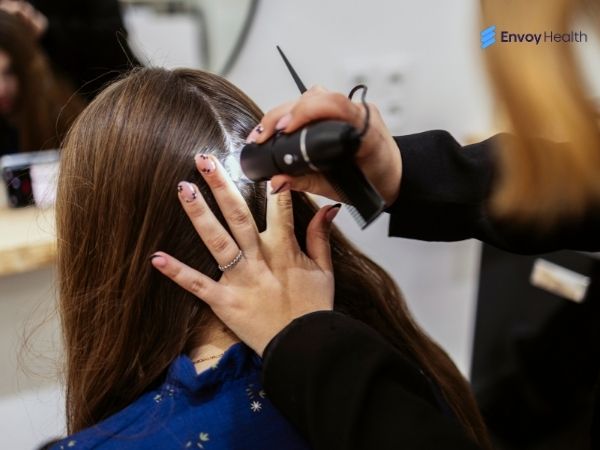
- Physical examination: Scarring hair loss dermascopy is the most common diagnostic tool used for visual examination. This handheld device allows dermatologists to gain a clear picture of hair loss patterns and signs of visible inflammation. They consider the follicular openings, scalp surface texture, and presence of blood vessels to understand the severity of scarring.[7] Further, they conduct a pull test by pulling a single hair strand to see how easily it detaches.
- Medical history: The dermatologist will ask detailed questions to understand the symptoms' duration and onset. They will understand the specific symptoms, supplements, current medications, and hair care routine. Clearly, convey any familial history of pattern baldness and autoimmune disorders.
- Scalp biopsy: Dermatologists perform a scalp biopsy to collect a small tissue sample with a punch tool under local anesthesia. Pathologists will test this sample at the lab to identify the exact type of immune cells involved.
- Blood tests: Blood tests to rule out the underlying root cause will be performed. They do blood sample collection and send it to the lab for testing to identify any underlying infection, systemic autoimmune cause, or nutritional deficiencies.
Can Scarring Hair Loss be Cured?
Though reversal is rare, scarring hair loss can be cured when treated at the early onset of symptoms. Since the damage is permanent, hair regrowth cannot be guaranteed. The later-stage treatment aims to stop or slow down the progression of inflammation and tissue damage. Regrowing hair on fibrous scar tissue is not possible under natural circumstances. Many look for cosmetic fixes such as hair transplantation, wigs, hairpieces, and scalp micropigmentation rather than relying solely on medical treatment.
Final Word
Scarring hair loss can be unsettling due to permanent follicular damage and scar tissue formation. While hair loss reversal is nearly impossible, acting early upon noticing the initial symptoms can greatly reduce the damage. A qualified and certified dermatologist, hair care expert, or trichologist will conduct a detailed examination to confirm the condition. See your doctor when you notice abnormal hair loss and changes in your scalp.
Talk to trusted experts and understand your treatment options with confidence. Whether you are seeking a diagnosis, a second opinion, or specialized care, connecting with experienced hair restoration and dermatology specialists can help you make informed decisions about your health. Sign up with Envoy Health today to get matched with leading specialists and take the first step toward managing scarring hair loss with expert guidance.
References
- Alopecia
- Lichen Planopilaris
- Frontal fibrosing alopecia
- Frontal Fibrosing Alopecia
- Hair loss types: Central centrifugal cicatricial alopecia overview
- Scarring Alopecias: Pathology and an Update on Digital Developments
- Dermoscopy of Hair and Scalp Disorders (Trichoscopy) in Skin of Color – A Systematic Review by the International Dermoscopy Society “Imaging in Skin of Color” Task Force
Ready to compare hair transplant options?
Get clinic options, pricing guidance, and recovery expectations from Envoy Health before taking the next step.
Disclaimer
The information in this article is for educational purposes only and does not replace medical advice. Always consult your doctor before starting any treatments.
Published by Envoy Health. Reviewed for patient-safety framing by Envoy Health Medical Content Review. See our editorial, AI-assistance, and medical review policy.
To request a correction, email contact@envoyhealth.io with the page URL and supporting source.
Compare reviewed clinics, pricing guidance, and recovery expectations before you commit.
Hair loss due to the formation of scar tissue on the scalp is visibly distinct with a shiny, smooth appearance. It typically starts as localized, patchy hair fall that gradually expands in area or becomes more diffuse. A closer look at the bald area reveals the absence of hair roots, follicles, and the pores (follicular ostia).
Autoimmune disorders such as systemic lupus erythematosus, lichen planopilaris (LPP), and frontal fibrosal alopecia (FFA) cause scarring alopecia. Another commonly discussed hair loss pattern, alopecia areata, also has an autoimmune origin but shows non-scarring hair loss. Each problem is different and will need expert evaluation for better outcomes.
Hair loss scarring is easily understood with the clear symptoms such as patchy hair loss, intense discomfort, itching, and scalp irritation. As it progresses, the scalp loses its natural texture, becoming smooth and shiny. Relying on visible symptoms should not confirm the condition. A comprehensive evaluation done by a qualified dermatologist or trichologist will confirm the root cause.
So, we partner with the premier healthcare facilities!


Send me the list