Types Of Alopecia Hair Loss: A Simple Guide To What You Might Be Dealing With

Compare hair transplant clinics before you commit
Get clinic options, pricing guidance, and recovery expectations from Envoy Health before taking the next step.

Key Takeaways
- In medical terms, hair loss is alopecia. Patterns such as androgenetic alopecia, alopecia areata, or telogen effluvium present differently and require closer attention. Physical examination, along with scalp analysis and hormonal studies, throws a clear picture of the underlying cause.
- The types of alopecia hair loss vary in cause and progression, as genetic factors drive pattern baldness, autoimmune responses cause alopecia areata, and stress or deficiencies often lead to temporary shedding.
- Early diagnosis matters, since non-scarring types like telogen effluvium can be reversed with appropriate care, whereas scarring alopecia may cause permanent hair loss if left untreated.
Still worried about pain or recovery?
Most discomfort depends on technique, graft count, anesthesia, and aftercare. Envoy can help you compare clinics that explain the pain-management plan up front.
What Is Alopecia Hair Loss?
Hair follicles fall out and regrow as part of their growth cycle. However, a few types of hair loss follow an unusual pattern that needs close attention before things worsen. Recognizing these changes early is crucial. It can help you determine whether it’s temporary shedding or one of the types of alopecia that may require appropriate treatment. Alopecia is a common term for various types of hair loss, ranging from gradual thinning to sudden bald spots. But here comes the question: how to differentiate between the two? We detailed this in the upcoming section.
Is My Hair Loss Alopecia?
As a direct answer, your hair loss can be alopecia, but not every hair loss is alopecia. The American Academy of Dermatology states that losing 50-100 hair strands per day is normal.[1] Hair strands falling out and regrowing back are a part of the normal growth cycle. However, it's alarming when the hair loss follows an unusual pattern showing any of the following signs:
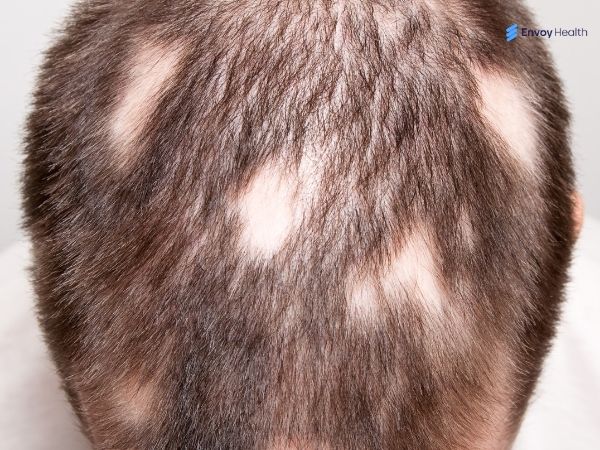
- Round, bald, coin-sized spots on the scalp
- Noticeable thinning of eyebrows, eyelashes, beard, and scalp
- Sudden clumps of hair in the shower and on the pillow
- Hair loss with visible scarring and scaling of the scalp and body skin
- Sudden hair loss with itching, inflammation, and tenderness of the scalp
Your hair loss, with any of the above-mentioned signs, can be an indication of alopecia. It's better if you see your dermatologist as and when you notice any of these symptoms. Remember that early attention has better outcomes.
What Are The 5 Types Of Alopecia?
Different types of alopecia hair loss vary in their underlying causes, form, and extent. Knowing the various types of alopecia and their causes will help you understand what you are truly dealing with. Below, we detail the 5 main alopecia types along with the subtypes.
Androgenetic Alopecia (AGA)
It is the most common type of alopecia affecting both men and women. While the causes are hereditary, in most cases, the hair loss follows a pattern, with visible differences between men and women. Pattern alopecia in men often presents with a receding hairline (M-shaped) and crown thinning. In women, diffuse thinning of hair at the top of the head, with a widening middle part. Certain genetic factors are inherited, imparting follicular-sensitivity to the DHT (dihydrotestosterone) hormone. As a result, the hair follicles shrink, leading to slower growth and thinning hair strands. AGA is progressive and advances with time. However, prompt attention at the right time can lead to reversal and full hair.[2]
Alopecia Areata
It presents as typical, coin-sized, circular patches on the scalp and body. Alopecia areata hair loss is an autoimmune condition.[3] The body’s immune system wrongly targets the hair follicles, causing them to shrink and halt hair growth over time. The causes are internal, a mix of genetic and environmental factors, and cannot be mistaken for stress, diet, or lifestyle. It can range from small patches to full body hair loss. Here we briefed on the few main types of alopecia areata:
- Patchy alopecia areata: The most common type of alopecia areata, that occur as one or more round coin-sized patches over the scalp and body.
- Alopecia totalis: Involves hair loss all over the scalp, where the follicles still remain alive but do not continue their growth cycle.
- Alopecia universalis: The most severe form with hair loss all over the scalp, body, eyelashes, and eyebrows. Symptoms include total loss of body hair.
- Diffuse alopecia areata: Appears as sudden, unexpected hair thinning all over the scalp.
- Alopecia barbae: Patchy hair loss that affects the beard in men, often accompanied by itching, skin discomfort, and irritation.
- Ophiasis alopecia: Associated with band-patterned hair loss along the sides and the back of the head.
Scarring Alopecia
This permanent hair loss is also called cicatricial alopecia. Inflammation irreversibly destroys the hair follicles, resulting in fibrous scar tissue. Symptoms such as redness, pain, itchiness, and heat accompany hair loss. Below are a few types of scarring alopecia classified based on the inflammatory cell involved.
- Central centrifugal cicatricial alopecia: This type is most common among women, and it starts at the center and spreads outwards. It is often associated with styling, excessive heat from hot combs, straighteners, and chemicals.
- Frontal fibrosing alopecia: This hair loss type is common among postmenopausal women. It is associated with hair loss in the eyebrows and front hairline.
- Lichen planopilaris: This is a chronic autoinflammatory condition that destroys hair follicles. This leaves behind shiny, smooth patches of skin, often accompanied by burning and redness.
- Folliculitis decalvans: While the exact cause is unclear, the condition is characterized by clusters of pustules that appear as multiple hair strands emerging from a single follicle. These appear like the bristles of a toothbrush. Over time, hair follicles die, preventing new hair growth. [4]
- Discoid Lupus erythematosus: Hair loss due to the chronic autoimmune response that destroys the hair follicles of the scalp. Scaly, red patches and sacred tissues cause pain and inflammation. The condition is associated with skin thinning and significant color changes.
Non-Scarring Alopecia
Non-scarring alopecia is a form of hair loss where the hair follicles are preserved. The scalp tissue does not experience any major tissue changes, nor do the follicles lose their viability. This means the hair loss is generally reversible with prompt care. However, it can be diffused, localized, or patchy depending on the underlying cause. We detailed the various types below.
- Anagen effluvium: It is associated with the rapid loss of actively growing hair within weeks of any specific trigger. These include chemotherapy or radiation to treat cancers, as well as a toxin attack. The hair gets brittle and sheds off quickly within a few days. You will not notice any visible color changes in the scalp. Regrowth is possible when the trigger is stopped.
- Telogen effluvium: This temporary hair loss is diffuse and is associated with stress, hormonal shifts, and chronic nutritional deficiencies. Generally, hair loss happens in lumps when excessive follicles enter a resting phase. Most commonly, this occurs following illness, childbirth, or severe stress. Candidates notice more hair loss in the shower or while brushing it.
- Traction alopecia: Hair loss due to continued pulling of the hair follicles, typically due to tight ponytails, headbands, or braids. While it is reversible in most cases, the long-term extension can permanently damage the follicles. Candidates notice redness, bumping, itching, and stinging on the scalp.
- Tinea capitis: Hair loss due to fungal infection caused by a contagious scalp ringworm. The patched hair loss is accompanied by a badly itching, scaly scalp. This is typically common in children living in moist, warm regions. Since it's an infection, the chances of its spread does exsit through sharing combs and hats.
Does Alopecia Vary With Gender And Age?
While alopecia is a common term for hair loss, its appearance varies in males, females, and children.
Types Of Alopecia Hair Loss In Females
Women generally experience hair loss due to pattern alopecia, telogen effluvium, and alopecia areata. Although rare, scarring alopecia and traction alopecia are also common besides other types of alopecia in females hair loss. These conditions are actually limited to specific lifestyles and underlying health conditions. The extent of hair loss may be localized to patches, diffuse, or complete, depending on the exact cause and severity of the condition.
Typically, pattern alopecia is widespread across the scalp with a widening part and thinned hair. On the other hand, alopecia aerata in female hair loss can be patchy or complete. Telogen effluvium, on the other hand, is temporary and can be caused by stress, age-related hormonal shifts, or nutrient deficiencies.
Types Of Alopecia Hair Loss Male
Men commonly experience androgenetic alopecia (pattern baldness) and telogen effluvium. Alopecia areata and cicatracial alopecia are the other less common types of hair loss in men.
Among others, male pattern baldness or androgenic alopecia is the most common type. Genetic and hormonal factors commonly cause pattern baldness in men, presenting as a receding hairline (M-shaped) and a thinning crown. This progressive hair loss pattern leaves a thin strip of hair at the back of the head during the advanced stages. The androgen hormone dihydrotestosterone (DHT) causes hair follicles to shrink and stop hair growth.
Types Of Alopecia Disease In Children
Children in their growing years are less likely to experience hair loss from common causes. But cases can occur due to specific conditions, such as tinea capitis, alopecia areata, traction alopecia, or other genetic or medical issues.
General Causes Of Alopecia Hair Loss
Alopecia hair loss can happen due to a variety of factors, such as:
- Autoimmune conditions
- Stress or trauma
- Age-related hair loss
- Hormonal changes during pregnancy, childbirth, and menopause
- Medications and ongoing treatments such as chemotherapy, radiation
- Scalp infections
- Genetics and hereditary (in cases of pattern baldness)
Treatment For Alopecia Hair Loss
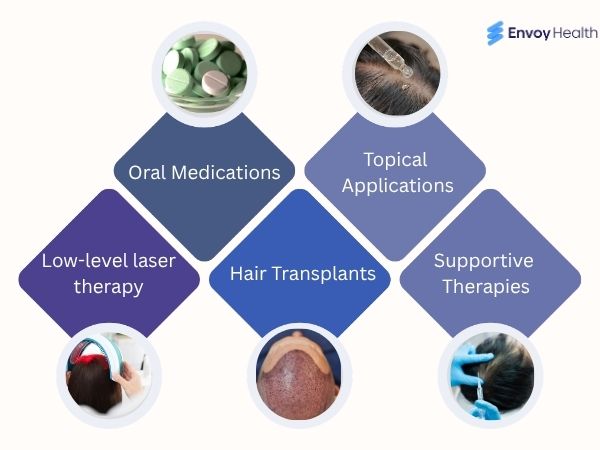
Types of alopecia and treatment vary considerably based on underlying factors. It's worth noting that hair loss is not the same for everyone, and neither is the treatment. A qualified, certified dermatologist or trichologist will examine your scalp and recommend the right approach. They will look for signs and patterns of hair loss. Plus, they will try to understand how long it has been, other associated symptoms, and family history of autoimmune diseases and baldness. Note that treatment is never the same for two candidates. It can either aim to regrow the fallen hair, slow or halt the progression of hair fall. The common alopecia hair loss treatments include:
Oral Medications
Oral medications are used to treat pattern baldness (in the early stages) and hair loss caused by autoimmune conditions. Oral supplements are recommended for hair loss in candidates with thinning hair due to a lack of vital minerals, like zinc and iron, and vitamins D, B2, B12, and B7. Immunosuppressants, corticosteroids, and JAK inhibitors are used to treat autoimmune condition-related hair loss. These suppress the body’s immune response against the hair follicles. Baricitinib, Ritlecitinib, and Deuruxolitinib are the FDA-approved JAK inhibitors used to treat alopecia areata. Finasteride and dutasteride are the oral medications used to treat male pattern baldness. Being a non-invasive approach, it is widely accepted across various cultures.
Topical Applications
Minoxidil, high-potency corticosteroids, and certain immunotherapy medications are the most commonly used topical medications for alopecia hair loss. Among these, minoxidil is a popular treatment for pattern baldness. This FDA-approved drug has vasodilating properties that enhance the scalp blood flow and prolong the follicle growth phase. Corticosteroids reduce the immune attack on hair follicles in hair loss due to autoimmune conditions. These also reduce the inflammation around the follicles and stimulate regrowth.[5] Topical immunotherapy drugs work strategically. Drugs like DPCP and SADBE induce a controlled allergic reaction on the scalp. This shifts the body’s immune system from attacking hair follicles to the induced contact dermatitis.[6] Given the non-invasive nature of the approach, topical applications are highly recommended. However, their relevance and effectiveness vary with the severity of the issue.
Light Or Laser Therapy
Low-level laser therapy (LLLT) is a non-invasive, FDA-approved treatment for hair loss. It uses medical-grade lasers and LEDs to stimulate hair growth. These dys, LLLT is widely opted to treat cases of pattern baldness and the recovery stages of hair transplant. Light at specific wavelengths is used to increase scalp blood flow and extend the growth phase of hair follicles. So you will notice increased hair regrowth and slowed down shedding. While it's safe and has the fewest side effects, the results are not dramatic. You should wait for around 3-6 months for noticeable results. Depending on the conditions, LLLT is combined with minoxidil or other supportive therapies.
Hair Transplants
Hair transplant surgeries are used to treat pattern baldness in men and women. Qualified hair transplant specialists harvest the healthy hair follicles from the back of the head and implant them in the bald areas. They rely on modern tools and techniques to ensure follicle sterility and orientation. The transplanted follicles continue their natural growth cycle. Hair transplant surgeries vary by technique. FUE and the DHI are the popular, modern-day methods. Some hair transplant doctors also use advanced digital software to design natural-looking hairlines and rely on robotic techniques for precise, accurate results. However, note that hair transplant surgeries are minimally invasive, slightly expensive, and provide better outcomes for early stages of baldness.
Supportive Therapies
Supportive therapies for hair loss are better suited to address hair thinning caused by temporary factors such as stress and nutrient deficiencies. Platelet-rich plasma (PRP) injections, exosome therapy, and nutritional supplements. The components of PRP and exosome therapies stimulate hair regrowth by enhancing blood supply to the scalp. Vitamin and mineral supplements, on the other hand, help meet nutritional needs, addressing deficiencies that may be contributing to hair thinning and supporting healthier hair regrowth over time.
Final Word!
Hair loss doesn’t follow a single pattern, and understanding the types of alopecia hair loss can make a real difference in how you respond to it. Each type has its own causes and treatment approach, making early identification important. While some forms are temporary and manageable with supportive care, others may require targeted medical treatment. Recognizing the signs early can help slow progression and improve outcomes, while the right diagnosis gives you a clear path forward.
At Envoy Health, we help you turn that clarity into action. From expert consultations to personalized treatment options, our goal is to make the process straightforward and tailored to your needs. Sign up today and take a confident step toward the right care.
References
- Do You Have Hair Loss Or Hair Shedding?
- Androgenetic Alopecia
- Alopecia Areata
- Folliculitis Decalvans In Father And Son - Genes, Environment Or Both?
- Advances In Topical Therapies For Clinically Relevant And Prevalent Forms Of Alopecia
- Application Of Topical Immunotherapy In The Treatment Of Alopecia Areata: A Review And Update
Ready to compare hair transplant options?
Get clinic options, pricing guidance, and recovery expectations from Envoy Health before taking the next step.
Disclaimer
The information in this article is for educational purposes only and does not replace medical advice. Always consult your doctor before starting any treatments.
Published by Envoy Health. Reviewed for patient-safety framing by Envoy Health Medical Content Review. See our editorial, AI-assistance, and medical review policy.
To request a correction, email contact@envoyhealth.io with the page URL and supporting source.
Compare reviewed clinics, pricing guidance, and recovery expectations before you commit.
Yes, alopecia is the medical term for hair thinning or hair loss. However, not every alopecia condition is just hair thinning. In some candidates, it indicates an underlying serious autoimmune condition, contagious infection, or a hormonal issue. See your dermatologist or trichologist for prompt care. Early diagnosis and treatment offer better outcomes.
There are four main types of alopecia. While androgenetic alopecia is the most common, it occurs due to genetic and hormonal factors. Alopecia areata occurs when the self-immune system attacks and damages the hair follicles. Scarring alopecia, on the other hand, can be permanent, while non-scarring alopecia can be reversed with the right approach.
Complete hair loss can occur in cases of alopecia totalis and alopecia universalis. These forms of alopecia areata hair loss result from the body’s autoimmune attack on hair follicles. The immune system mistakenly treats hair follicles as foreign bodies, leading to their shrinkage. As a result, candidates lose hair all over the scalp, including facial hair.
Alopecia hair loss varies considerably depending on the underlying condition. It's better to contact your dermatologist or trichologist when you notice abnormal hair loss. Loosing 50-100 strands in a day is normal. However, any hair loss beyond this, with noticeable hair loss during showers, pillows, can be an indication of alopecia. Do not neglect round patches of hair loss, as they can be due to alopecia areata. Telogen effluvium can be reversible with simple withdrawal from stressors. However, not all hair loss types can be treated at home. Some require medical attention to address the root cause.
Scarring alopecia hair loss is permanent. The scalp becomes fibrous scar tissue, irreversibly damaging hair follicles. Hair loss can be reversed when the new strands grow. This happens when the hair follicles are still intact and viable. However, hair regrowth is not possible in scar tissue bearing non-viable follicles.
So, we partner with the premier healthcare facilities!


Send me the list