Treatment For Scarring Alopecia: Medical Options, Remedies, And What Actually Works

Compare hair transplant clinics before you commit
Get clinic options, pricing guidance, and recovery expectations from Envoy Health before taking the next step.

Table of contents
- Severity of Scarring Alopecia
- Can Scarring Alopecia Be Reversed?
- What Scarring Hair Loss Treatments Do?
- Scarring vs. Non-Scarring Alopecia: Treatment Differences
- Best Treatment Options for Scarring Alopecia
- Natural Ways to Support Scarring Alopecia Treatment at Home
- When to Consult a Doctor
- Understanding Scarring Hair Loss ICD-10 Codes
Key Takeaways
- Regrowth in scarring hair loss is not possible because of the irreversible destruction of hair follicular stem cells. Medical treatment controls inflammation and preserves the remaining follicles. Treatment follows a combined approach and is specific to the underlying inflammatory mechanism.
- Anti-inflammatory corticosteroids and immunomodulators control inflammation, while antimicrobial therapies treat underlying fungal and bacterial infections. Surgical hair transplants and scar tissue excision are advanced methods for hair regrowth and are performed only after active inflammation has halted. Stimulation using PRP and low-level laser light improves scalp health and supports regrowth in surrounding scalp tissues.
- Home-cure for scarring alopecia cannot reverse hair growth. Instead, it offers certain benefits for overall scalp health. Relying on an anti-inflammatory diet, supplements, and scalp massages will reduce inflammation, improve scalp blood circulation, and control hair loss.
Still worried about pain or recovery?
Most discomfort depends on technique, graft count, anesthesia, and aftercare. Envoy can help you compare clinics that explain the pain-management plan up front.
How Serious is Scarring Alopecia?
Scarring alopecia (cicatricial alopecia) is one of the most serious forms of hair loss because the damage it causes is permanent. Unlike common types of hair loss that may be reversible, scarring alopecia destroys hair follicles and replaces them with scar tissue, making natural hair regrowth unlikely. Although it accounts for only about 3% of all hair loss types, early diagnosis and treatment are critical to prevent further follicle destruction and irreversible hair loss.[1]
Can Scarring Alopecia be Reversed?
Scarring hair loss cannot be reversed in many cases because of the fibrous scar tissue formed. However, if the condition is caught and treated early, especially during the active inflammatory stages can slow down the progression, preserving healthy follicles.[2] Unlike other less severe, temporary alopecia types, scarring alopecia causes irreversible damage to the healthy hair follicles. Inflammation targets and destroys the active stem cells, without which hair regrowth cannot happen.
What Does Scarring Hair Loss Treatment Do?
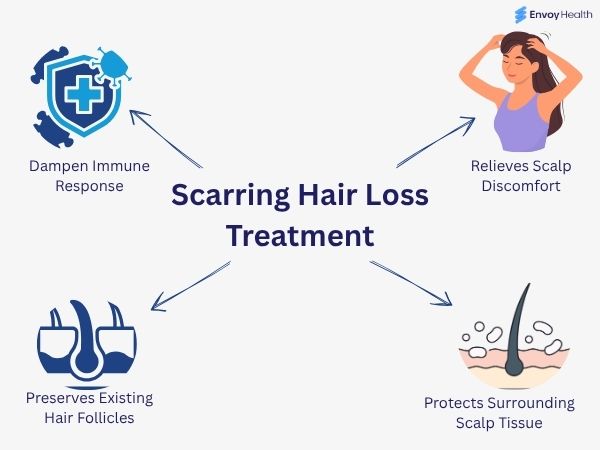
The treatment for scarring hair loss aims to reduce inflammation, prevent progression, and manage scarring alopecia symptoms. The American Hair Loss Association states that the early stages of scarring alopecia are characterized by the active accumulation of inflammatory cells around hair follicle stem cells, which can lead to permanent damage if left untreated.[3] The main intent of effective treatment is:
- To dampen the immune response and control its advancement
- Relieve discomfort and other symptoms caused by the initial inflammatory attack
- Protect the surrounding scalp tissue from further scarring
- Preserve existing hair follicles and prevent additional hair loss
Treatment for Non-Scarring Alopecia Versus Treatment for Scarring Alopecia
Scarring and non-scarring alopecia significantly vary in the type of damage hair follicles experience. So the treatment approaches also vary significantly. We tabulated the key differences below.
Hair loss treatment: Scarring versus Non-scarring
|
Scarring hair loss treatment |
Non-scarring hair loss treatment |
|
Follicles destroyed, regrowth on scarred tissue is not possible |
Follicles enter the dormant stage. Regrowth is possible |
|
Treatment aims to stop inflammation and prevent the progression of follicular damage |
Treatment aims at correcting triggers and promoting regrowth |
|
Anti-inflammatory corticosteroids, immunomodulators, antimicrobial drugs, and surgical options |
Topical minoxidil, finasteride, and hair transplant surgeries |
|
At-home remedies, platelet-rich plasma therapy, and low-level laser light therapy complement the medical treatment |
At-home remedies, platelet-rich plasma therapy, and low-level laser light therapy support hair regrowth in early hair loss stages |
What is The Best Treatment for Scarring Alopecia?
The best treatment for scarring alopecia depends on the hair loss type and its underlying cause. The dermatologist, or hair care expert, will identify the specific scarring alopecia causes that lead to the symptoms. It's because the different forms of scarring alopecia may present similar symptoms. However, they do not always respond to the same treatment due to significant variation in the underlying inflammatory mechanism. Review studies state that a classification study by the North American Hair Research Society (NAHRS) identifies various immune cell types as major determinants of treatment and management. [4] Treatment methods are prescribed as a combined approach and are often off-label. [5] Below, we discussed some common treatment approaches:
1. Anti-Inflammatory Medications
Anti-inflammatory medicines are the most common treatment for suppressing the immune system's attack on hair follicle stem cells. These medications reduce the activation and migration of lymphocytes and macrophages and block cytokine release and interleukin action, all of which control active inflammation. Thereby, they halt the destruction cycle and preserve the remaining follicles from further attack. Anti-inflammatory medicines are administered orally, topically (as creams or gels), or by injection.
- Corticosteroids: These are general immunosuppressants and anti-inflammatory agents that reduce overall immune cell activity and suppress the production of inflammatory cells. Topical corticosteroids, such as clobetasol propionate, are a first-line therapy for scarring alopecia, including frontal fibrosing alopecia (FFA) and lichen planopilarus (LPP).[6] Triamcinolone acetonide interlesional injections are another effective option, as the medicine penetrates directly into the dermis to begin its action. Oral systemic corticosteroids, such as prednisone, and oral anti-inflammatory medications, including tetracyclines and hydroxychloroquine, are prescribed for rapidly progressing alopecia. [7] These quickly calm the immune response, easing discomfort from the inflammatory flare.
- Immunomodulators and biologics: Immunomodulators do not shut down the entire immune system. Rather, they modify and redirect the immune system's behavior. Tofacitinib, Baricitinib, and Brepocitinib are the popular immunomodulators used to treat LPP, FFA, and other chronic inflammatory scarring alopecia forms. These specifically block the JAK-STAT signaling pathway, the primary driver of chronic scalp inflammation. [8] Biologics are specially designed injectable proteins that block the cytokine pathways, another primary driver for inflammation. Adalimumab and Infliximab are two popular biologics used to treat scarring alopecia.
2. Antimicrobial Therapies
Antimicrobial therapy is recommended when a bacterial or fungal scalp infection is the primary cause of scarring alopecia. Tetracycline-class antibiotics and topical antifungal formulations are commonly prescribed to treat Folliculitis Decalvans and central centrifugal cicatricial alopecia (CCCA). These are well known for their antibiotic and anti-inflammatory activities. Meaning they halt the immune system's attack and control the bacterial and fungal load. Patients with central centrifugal cicatricial alopecia are recommended antifungal shampoos to control the localized inflammation.[9]
3. Stimulation Therapies
Methods like microneedling, platelet-rich plasma therapy (PRP), and low-level light therapy (LLLT) stimulate the scalp and reduce inflammation, and manage symptoms. These are used in combination with topical and restorative hair regrowth treatments.
Microneedling for scarring alopecia uses controlled micro-injuries to the scar tissue. The physical injury helps break down and remodel the fibrous tissue, thereby releasing growth factors and promoting blood vessel formation. Note that effectiveness varies by patient, depending on the severity of scar tissue. Too tough scars are hard to show positive results.
Studies suggest a positive effect of PRP on hair regrowth in patients with LPP and FFA types of scarring alopecia. While the exact mechanism driving regrowth remains to be understood, it is believed that the active growth components in the plasma could be the real cause. Besides hair growth, PRP injections also reduce inflammation and ease the irritating symptoms. Additionally, the active components of plasma increase blood supply and stimulate dormant follicles in the surrounding scalp tissues.[10]
The use of low-level light therapy (LLLT) is a proven technique for tissue repair and healing. Scarring hair loss from conditions such as LPP and CCCA is treated with LLLT.[11] These mechanical stimulation methods dilate blood vessels, improve scalp blood circulation, and the distribution of nutrients and oxygen. This benefits the condition of the surviving hair follicles and softens simple scars.
4. Surgical Methods
Surgical restoration of hair in cases of scarring alopecia involves invasive techniques. These are the better approaches for hair regrowth in secondary scarring alopecia due to burns, wounds, and deep skin infections. Hair transplantation methods such as FUE and DHI are performed by expert hair transplant specialists. They select individual hair grafts from donor areas and transplant them into the damaged hair-loss areas. The effectiveness of the results depends on the scar size, its stage (whether inflammation is active or dormant), and donor hair quality. Candidates with an active stage of inflammation and ongoing hair loss are not recommended for hair transplantation. A hair transplant technique can restore hair in bald areas only if it's performed after the underlying inflammation has completely resolved and there is no hair loss.
Surgical excision is performed by certified plastic surgeons. They remove the scar tissue and replace it with healthy, surrounding scalp tissue. This portion has natural hair follicles free from inflammation, so the hair grows naturally. It is similar to the forehead-lowering procedure.
5. Supportive Care
Gentle scalp massages are recommended as a supportive treatment to mechanical stimulation and anti-inflammatory therapies. Scalp massaging improves blood circulation, oxygen, and nutrient distribution, boosting hair regrowth and improving scalp health. However, it is never recommended during active inflammation. Massaging and rubbing the scalp can worsen the scalp irritation, itching, burning, redness, and tenderness.
How to Treat Scarring Alopecia Naturally at Home?
Natural care and at-home remedies cannot completely reverse scarring hair loss. While these are not mainstream treatments or a way to reverse irreversible damage, they complement other proven treatment methods. Furthermore, at-home remedies soothe the symptoms, easing the emotional journey and physical loss.
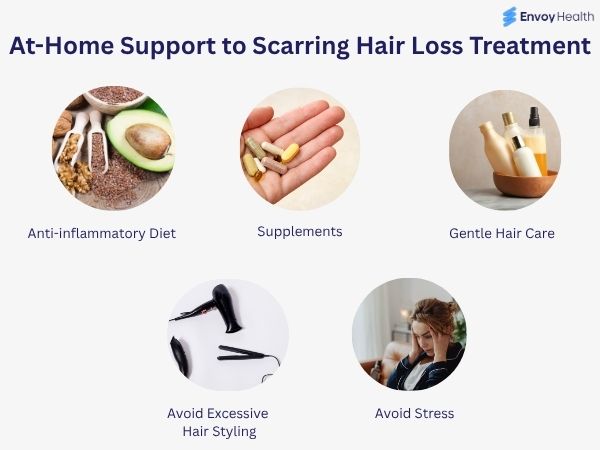
- Anti-inflammatory diet: Relying on a diet rich in omega-3 fatty acids, antioxidants, nutrients, and minerals supports scalp health and reduces inflammation. Incorporate walnuts, flaxseeds, and fish oil in a regular diet. Strictly avoid inflammatory triggers that disturb the gut balance or trigger an inflammatory response. Avoiding processed, sugary, and deep-fried foods benefits hair health as well as overall health.
- Targeted supplements: Get checked for nutrient deficiencies and correct them using targeted supplements. Zinc, iron, and vitamin D deficiencies are serious concerns for hair and overall health. Targeted supplements prevent oxidative stress, support DNA repair, and protect surviving hair follicles.
- Gentle hair care: Apply pure aloe vera gel to the scalp to soothe itchy, reddened skin and burning sensation. Use diluted rosemary essential oil or tea tree essential oil to gently massage the scalp. These keep the scalp clean and healthy. Applying undiluted essential oil concentrations directly to the scalp can cause irritation, so avoid doing so. A gentle massage of the unaffected areas with light pressure improves blood circulation to the growing hair follicles. Aggressive rubbing on the affected areas can worsen the symptoms.
- Hairstyling habits: Refrain from using blow dryers, heat curlers, and straighteners. Excessive usage only damages the hair's natural environment. Allow the hair to dry naturally. Excess mechanical stress and tension on hair strands cause traction-related issues. Do not wear tight braids, ponytails, or hair extensions. Use sulfate-and fragrance-free dyes, shampoos, and conditioners. This will help you retain moisture on the scalp, prevent dryness and inflammation, and preserve its microenvironment.
- Stress management: Managing stress lowers cortisol levels, which in turn reduces the body’s inflammatory response and follicular damage. Although stress is not a direct cause of scarring alopecia, chronic stress may worsen inflammation. Techniques such as meditation, exercise, and adequate sleep may support overall well-being and complement medical treatment.
Is Home Cure for Scarring Alopecia Sufficient?
Home care is never sufficient to cure scarring alopecia. Cicatricial alopecia, or scarring hair loss, is a result of follicle-level damage. A general scalp massage or a strict diet cannot reverse the inflammatory response. These only complement medical treatment, improving the health of the scalp and the remaining hair follicles.
When to See a Doctor?
It's best to see your doctor immediately upon noticing scalp symptoms such as itching, burning, redness, tenderness, or abnormal hair loss. Don’t wait until the bald patches appear. By then, the hair follicles could face permanent destruction. A certified dermatologist or hair care expert will diagnose the condition to prescribe the appropriate medicine for scarring alopecia.
What do Scarring Hair Loss ICD-10 Codes Relate To?
While hair loss occurs for various reasons, doctors use the scarring alopecia code (L66) as per the ICD-10-CM (International Classification of Diseases, 10th Revision)[12]. It is further classified as L66.12 (for Frontal fibrosing alopecia), L66.81 (for central centrifugal cicatricial alopecia), L66.11 (classic lichen planopilaris), and L66.2 (folliculitis decalvans). The WHO states ICD as a global standard language for health data. Simply, it means ICD-10 serves as a common language for recording, reporting, and monitoring.[13] Using the right code is crucial for determining its medical necessity, insurance approval, and guiding long-term clinical care. Insurance does not directly cover the treatment for cicatricial alopecia. However, it covers the medical treatment to stop the underlying inflammation and correct the scalp damage. Cosmetic microneedling, hair restoration, and hairline-lowering surgeries should be paid for out of pocket.
Final Word!
Although scarring alopecia is rare, it is a serious condition because it causes permanent damage to hair follicles and scalp tissue. Once scar tissue forms, hair cannot regrow in the affected areas. However, early treatment during the active inflammatory stage can help slow its progression, relieve symptoms, and protect the remaining hair follicles from further damage.
If you're considering treatment options, Envoy Health can help connect you with experienced hair restoration specialists and clinics. Sign up today to compare treatment plans, receive personalized guidance, and take the next step toward preserving your remaining hair and scalp health.
References
- Scarring Alopecia Alopecias cicatriciales
- Reversible hair loss in a patient with cicatricial alopecia: A case of regrowth associated with pioglitazone use
- Scarring Alopecia (Cicatricial Alopecia)
- Scarring Alopecias: Pathology and an Update on Digital Developments
- Utilization Management Barriers Among Patients With Cicatricial Alopecia
- Topical Treatment for Scarring and Non-Scarring Alopecia: An Overview of the Current Evidence
- Optimal Management of Frontal Fibrosing Alopecia: A Practical Guide
- Off-label use of biologics and janus kinase (JAK) inhibitors for scarring alopecias: a narrative review
- Central Centrifugal Cicatricial Alopecia: A Survey of Treatment Practices Among Dermatology Residents and Attending Physicians
- Platelet-Rich Plasma and its Use for Cicatricial and Non-Cicatricial Alopecias: A Narrative Review
- The Use of Light‐Based Therapies in the Treatment of Alopecia
- ICD-10-CM Code for Cicatricial alopecia [scarring hair loss] L66
- Importance of ICD
Ready to compare hair transplant options?
Get clinic options, pricing guidance, and recovery expectations from Envoy Health before taking the next step.
Disclaimer
The information in this article is for educational purposes only and does not replace medical advice. Always consult your doctor before starting any treatments.
Published by Envoy Health. Reviewed for patient-safety framing by Envoy Health Medical Content Review. See our editorial, AI-assistance, and medical review policy.
To request a correction, email contact@envoyhealth.io with the page URL and supporting source.
Compare reviewed clinics, pricing guidance, and recovery expectations before you commit.
Hair does not naturally grow on scarred scalp tissue. A scar on the head generally replaces the natural hair follicles and lacks the natural vascular connections, making regrowth impossible. Surgical methods, such as hair transplantation (via FUE) and microneedling, can regrow hair on scarred scalp tissue. However, inflammation and ongoing hair loss should be halted before the procedure to achieve optimal results.
Natural hair growth on a scarred scalp at home is not possible. Scar tissue, whether due to an inflammatory response, physical injury, or burns, replaces the natural hair follicles with fibrous tissue architecture. It lacks sufficient blood flow to deliver adequate nutrients and oxygen, so natural home remedies cannot regrow hair. However, home remedies can ease the uncomfortable symptoms such as scalp irritation, redness, scaly skin, and itchiness.
An appropriate diagnosis and treatment approach can stop scarring alopecia from spreading. Anti-inflammatory corticosteroids (oral, topical, and injections) and immunomodulators stop the immune response. This helps prevent its spread while protecting healthy follicles from further attack. Acting early on with the onset of symptoms offers better outcomes.
So, we partner with the premier healthcare facilities!
Send me the list