Are Veneers Bad For Your Teeth? Here Is The Truth


Compare Smile Makeover options before you commit
Get clinic options, pricing guidance, and recovery expectations from Envoy Health before taking the next step.

Key Takeaways
- Dental veneers are not typically harmful to natural teeth. Enamel removal is permanent. Since enamel is acellular and cannot regrow on its own, the treated teeth will require some form of coverage even after the veneers are removed.
- Dental veneers, once fixed, last only 10-15 years, so replacement costs are unavoidable.
- Veneers are only safe on healthy teeth. Fixing them over decaying teeth, candidates with gum diseases, or by an unqualified dentist can lead to hidden cavities, early failure, and chronic gum inflammation.
Still comparing Smile Makeover options?
Envoy can help you compare reviewed clinics, pricing guidance, and recovery expectations before you make a decision.
Are Veneers Bad For Your Natural Teeth?
Veneers are not naturally bad for your teeth. Several studies suggest a higher survival rate.[1] In fact, they cover the flaws of natural teeth and offer a picture-perfect smile. Dental veneers are thin covers placed on the outer surface of natural teeth. They address flaws in front teeth, such as chips, cracks, stains, gaps, irregularities, and other cosmetic imperfections. Dental veneers are stain-resistant and durable, enhancing the appearance of the smile by imparting a balanced, harmonious look.
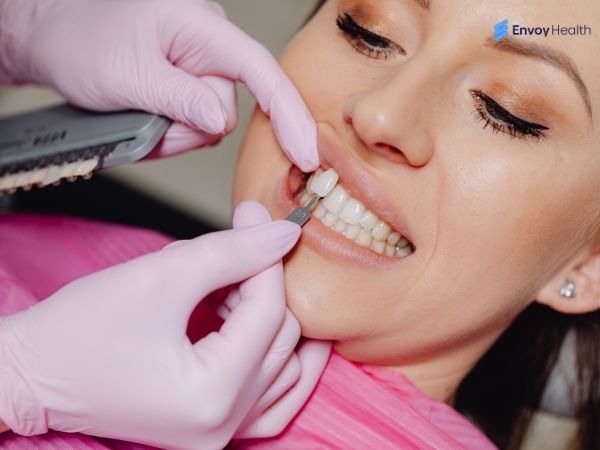
Dentists fix them on the front surface of the teeth after removing some portion of the enamel. This is actually an irreversible process. Scraping out the top enamel layer creates a rough surface on the tooth structure. This provides a better grip for the veneer adhesion and enough room to accommodate it. Enamel removal is a mandatory step to improve grip and prevent the teeth from looking overly bulky. However, the actual issue with veneers lies in this step.
But Why Veneers Are Bad?
While dental veneers as such are not bad, we detailed a few common issues patients should be aware of:
- Risk of tooth sensitivity: The real problem with veneers revolves around enamel removal, which increases the risk of tooth sensitivity. Tooth enamel is the strongest outer layer of the natural teeth. It protects the interior sensitive layers from physical wear, chemical erosion, and extreme temperatures. Its removal exposes the inner dentin layer rich in fluid-filled tubules. These lead their way directly to the pulp and nerve. An extremely thin enamel triggers a sharp, tingling sensation in the teeth upon exposure to too hot or too cold foods. Besides, tooth preparation during the veneer procedure also poses certain pressure on the tooth structure. This irritates the gum tissues at the contact surface, leading to swelling. Not just that, the curing gels used for veneer fixation contain acidic components. These make the natural teeth prone to tooth sensitivity.
- The irreversible change: Enamel is acellular, lacking living cells. Once eroded or shaved off, it cannot repair, regrow, or renew itself. So when a dentist shaves down the natural teeth and removes enamel, it cannot regrow. Since dental veneers are not permanent and last for 10-15 years, they should be replaced after this period. Teeth after veneers removed are smaller, rougher, and feel much like a shaved structure. Because the shaved-down enamel does not regrow, the natural teeth require some form of coverage, which may necessitate replacement. This relates to the costs of maintaining and replacing, cutting off veneers as a one-time investment.
Are Veneers Safe For Your Teeth?
Veneers are a safe choice when done by a qualified, skilled, and experienced dental professional on a suitable candidate. Proper candidate selection is just as important as choosing the right professional. Appropriate planning and the maintenance of good oral hygiene help ensure better outcomes without compromising overall health. In fact, veneers are among the most popular cosmetic dental treatments. Their growing popularity stems from their naturalness, technological advancements, and long-lasting results, as well as their ability to address issues related to shape, size, color, and alignment.[2]
When Are Veneers Unhealthy For Your Teeth?
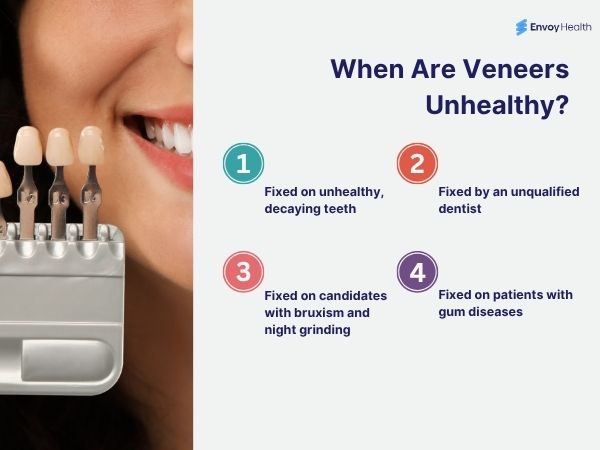
Veneers may not be the right option for everyone. Every dental concern differs considerably and requires a different approach. Better treatment outcomes are usually seen in suitable candidates. Dental veneers can be unhealthy, causing issues when:
- Fixed on unhealthy, decaying teeth. While dental veneers enhance aesthetics, they do not serve restorative purposes or address underlying oral health issues. Veneers should be placed on healthy teeth. Failing which can lead to unnecessary complications and early failure.
- Fixed by an unqualified dentist or someone who has less expertise. These veneers lack precision and leave rough margins that cause gum irritation and trap food particles. Dental veneers are customized shells that fit precisely. Rough margins from ill-fitting veneers cause bite issues and can eventually lead to hidden cavities.
- Fixed on candidates with habits such as bruxism and night grinding. Veneers cannot withstand high pressure and may sustain damage such as chipping, cracking, or displacement. Treatment done for unsuitable candidates can lead to early failure. Reports suggest that using an occlusal splint (a removable night guard) can enhance the performance and longevity of veneers.[3]
- Fixed on patients suffering from gum diseases, may lead to chronic gum inflammation, bleeding, with intense pain and discomfort. Impression collection for veneer fabrication on swollen gums with fluid discharge may lack precision. Veneers crafted with inaccurate impressions and weak bonding lack a precise fit. They may fail early due to detachment or tooth decay.
When Are Veneers Painful?
Veneer treatment is typically painless and comfortable. You don’t feel any pain or discomfort, except mild pressure and tooth sensitivity. Here are a few rare cases when veneer treatment can be painful.
- When the fixed veneers lack an accurate fit, being too thick or too thin, it eventually leads to an improper bite. Biting down with poorly fit veneers can be painful due to uneven pressure distribution.
- When the crafted veneers leave rough margins or have excessive dental cement. In either of these conditions, the veneers do not meet the gumline smoothly, causing gum irritation, pain, and inflammation. Redness and swelling along the gumline, with fluid discharge, lead to intense discomfort and pain.
- When the teeth suffered aggressive enamel preparation, exposing the inner dentin layer. Reaching closer to the underlying nerve causes sharp pain alongside tooth sensitivity.
- When fixed on teeth suffering from unaddressed gum problems and dental cavities. In either case, veneers can cause intense pain deep within the tooth, necessitating removal and dental treatment to address the underlying issue.
What Makes Veneers Bad Over Time?
Veneers have better outcomes when properly fixed and cared for. The chances of regret or patients rethinking the decision are rare. Many ask, “Are veneers bad for your teeth long-term?” To answer this question, while veneers have been successful in most cases, rarely do people regret their decision, especially when,
- They are unaware of the irreversible changes in tooth structure associated with dental veneer treatment.
- They have too high expectations for the possible results, but the outcomes are simple.
- They are clueless about the hidden costs of maintenance and replacement after the stipulated veneer lifetime has ended.
What If You Remove The Dental Veneers And Do Not Replace Them?
You cannot leave the teeth under veneers as such, once the dental veneers are removed. These appear short, rough, and shaved, affecting both appearance and performance. More importantly, the exposed dentin leaves them vulnerable to decay, sensitivity, and even cracking. There is no going back after dental veneer treatment. Dentists recommend either a new veneer, a composite restoration, or a dental crown to protect the natural tooth.
Final Thoughts
Dental veneers are not inherently unsafe. In fact, they improve the appearance of smiles and last for years. But they can be a bad option when done incorrectly or performed without determining candidature. With the right approach, veneers can be the right choice and worth the investment.
If you are struggling to choose the right dental professional, we are here to help. At Envoy health, we connect you with the top dental professionals. Sign up today to access world-class dental treatments tailored to your needs. Your smile deserves expert care, comfort, and confidence at every step of the journey.
References
- Clinical Survival Rate and Laboratory Failure of Dental Veneers: A Narrative Literature Review
- Dental Veneers Market By Product Type (Porcelain Veneers, Composite Veneers, Lumineers, No-prep Vaneer, Removable Vaneer), By Technology (Digital Impressions, 3D Printing, CAD/CAM Technology), By Material (Porcelain, Resin Composite, Zirconia, Lithium Disilicate, Others), By Application (Tooth Discoloration, Misaligned or Irregular Teeth, Chipped or Broken Teeth, Gaps Between Teeth, Others), By End User (Dental Hospitals, Dental Clinics, Academics and Institutions), Global Market Size, Segmental analysis, Regional Overview, Company share analysis, Leading Company Profiles And Market Forecast, 2025 – 2035
- Influence of Temporomandibular Disorders and Bruxism on Prosthodontics Rehabilitations Survival: A Focus on Veneers
Ready to compare Smile Makeover options?
Get clinic options, pricing guidance, and recovery expectations from Envoy Health before taking the next step.
Disclaimer
The information in this article is for educational purposes only and does not replace medical advice. Always consult your doctor before starting any treatments.
Published by Envoy Health. Reviewed for patient-safety framing by Envoy Health Medical Content Review. See our editorial, AI-assistance, and medical review policy.
To request a correction, email contact@envoyhealth.io with the page URL and supporting source.
Compare reviewed clinics, pricing guidance, and recovery expectations before you commit.
While dental veneers offer a better smile transformation, they carry certain disadvantages such as being expensive, causing permanent changes to teeth, and requiring mandatory replacement. Plus, they require strict candidature, and any compromise can lead to early failure.
Teeth under veneers do not rot or decay naturally. Certain conditions may lead to tooth decay. Trapped food particles, due to poor oral hygiene or an improper fit, can lead to chronic tooth decay. Symptoms include pain, inflammation, bad breath, bleeding gums, and gum sensitivity. Routine dental checkups and regular cleaning sessions help prevent tooth decay under veneers. Early identification reduces the risk of serious complications.
Veneers are a successful treatment with a decent satisfaction rate. However, people may regret veneer treatment when they are unaware that it involves permanent enamel removal, requires mandatory replacement after 10-15 years, and are quite expensive than other cosmetic dentistry treatments.
Composite veneers are not inherently harmful to your teeth, provided they are placed by a qualified dental professional and you have a healthy oral cavity. These require relatively less enamel preparation, so the chances of tooth sensitivity are quite low. Furthermore, the composite resin used for composite dental veneers rarely causes allergic reactions, so it's safe to get them.
Porcelain veneers are naturally beneficial when you are looking for cosmetic dental fixes. They offer a natural look and have better longevity than composite veneers. However, they are slightly expensive and can lead to dental issues when fixed by an inexperienced dental professional. Skilled and experienced dental experts perform a clear candidate evaluation before performing the procedure. This is crucial for the success of treatment, so you will not regret the decision.
So, we partner with the premier healthcare facilities!



Send me the list