Veneers Before and After: The Complete Process, Results and What to Expect


Compare Smile Makeover options before you commit
Get clinic options, pricing guidance, and recovery expectations from Envoy Health before taking the next step.

Key Takeaways
- The veneers before and after the procedure, along with the series of events, define the success of the treatment. Eye-catching before-and-after photographs of veneers may seem trustworthy. But pictures alone cannot speak to the background journey of any patient. Knowing the treatment plan helps to understand the sequence of events that happen before and after treatment.
- Good veneer preparation includes a clear discussion, a detailed price quote, and transparent pros and cons. The post-treatment outcomes include natural color, shade, and shape, with a precise fit.
- Inappropriate veneer treatment often results from a lack of clear consultation and planning. Poorly made veneers may have rough edges, unnatural translucency, or an unsuitable shade, causing them to appear bulky and artificial.
Still comparing Smile Makeover options?
Envoy can help you compare reviewed clinics, pricing guidance, and recovery expectations before you make a decision.
What Are Dental Veneers For?
Dental veneers are thin, custom-crafted shells used to cover the front teeth's flaws. They address aesthetic issues and provide a brighter, more harmonious smile. Dental veneers are a popular cosmetic dentistry (smile makeover) procedure. Dentists recommend veneers when you are looking for a solution that enhances your smile's appearance and corrects minor imperfections without intensive, invasive procedures.
Issues such as chips or cracks on the front teeth ruin their appearance. On the other hand, stains from food and lifestyle habits can make the smile look duller and less healthy. The visible gaps (diastema) between front teeth or crooked teeth due to malalignment ruin the entire smile. These issues may seem small, but their impact on facial beauty and overall confidence matters.
Tooth veneers are shell-like covers that your dentist will fix on the front surface of teeth with cosmetic problems. Crafted to match the original color, shape, and size of surrounding teeth, veneers blend seamlessly with the smile. By concealing visible flaws, they help create a more balanced, natural-looking, and confident smile.
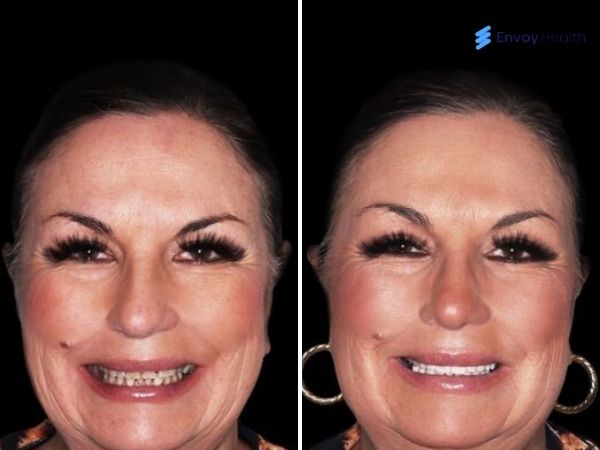
This patient didn’t like her dark, yellowish teeth with a worn out look and lots of spaces. She was underconfident to pose for pictures and was dissatisfied with her smile. Her teeth suffered deep surface stains that were resistant to general whitening treatment. One of our partner clinic brightened her smile by adding a pearl white look with veneers in upper and lower jaw. She is happy with a brand new picture-perfect, beautiful smile.
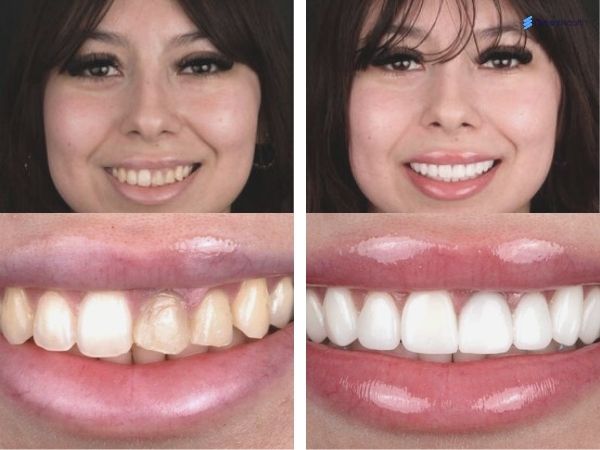
This patient had deep intrinsic staining on her upper front teeth. The kind that doesn't respond to whitening because the discolouration sits inside the tooth structure itself, not on the surface. Her teeth were also chipped and uneven, drawing the wrong kind of attention every time she smiled. It had quietly chipped away at her confidence over the years. At one of our partner clinic she got a brand new smile with porcleian veneers. The veneers corrected the staining, restored the chipped edges, and brought balance to the shape and size of her smile all without removing her natural tooth structure. She left the clinic in two visits, with a smile she wasn't hiding anymore.
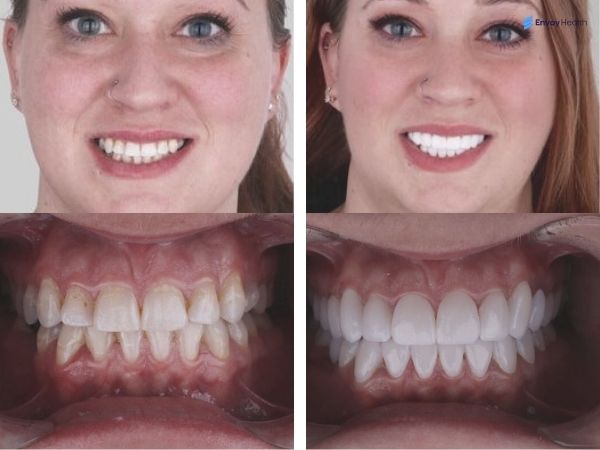
This patient had receding gums with dark triangular gaps after years of aggressive brushing. Her teeth were pulled back so badly that the underlying roots were exposed off. Dentists at our partner clinic used dental veneers to reshape the teeth and close the triangular spaces, adding volume at the base without touching the natural tooth structure. Now her pearl white smile is making eyes hard to turn off.
What Are Dental Veneers Not For?
Being clear and setting realistic expectations are crucial to improving patient satisfaction. Having unrealistic expectations can only lead to disappointment. Below, we list the functions for which veneers are not intended.
- Replace missing or fallen teeth, as veneers need an underlying natural tooth to be anchored upon.
- Address severe bite issues such as overbite, underbite, and crossbite, as veneers are intended for minor alignment problems.
- Treating gum or other periodontal diseases. Veneers are primarily for cosmetic purposes and do not significantly support oral health.
- Strengthen severely decayed teeth or restore bite force to weakened teeth. Veneers are purely for aesthetic purposes, and using them for restorative purposes is not advised.
Do You Really Need Dental Veneers?
While dental veneers can cover front teeth flaws, it's important to note that dental veneer treatment is irreversible. Therefore, veneer treatment is recommended for candidates with clear aesthetic concerns when conservative approaches have not delivered better results. We elaborate on this below. Dental veneers are your go-to approach only when your teeth flaws include
- Stubborn tooth stains that have not responded to teeth whitening treatment
- Minor alignment issues that do not require major orthodontic intervention. The veneers before and after crooked teeth seem considerably different, especially if the teeth have slight shape issues.
- Slight cracks and chips that do not cause functional problems, such as bite or chewing issues
Clear but short, veneers are a suitable option when you have sound oral health and cosmetic dental concerns that make you feel self-conscious about smiling in photos, speaking in public, and fully engaging in social interactions. However, this does not make everyone a suitable candidate. While dentists consider patient concerns before recommending a specific treatment, they also weigh potential red flags before proceeding. This improves treatment outcomes and reduces complications.
When Are Dental Veneers Not an Option?
The dentist may not recommend tooth veneers and recommend an alternative procedure in any of the following conditions:
- You suffer from dental health issues such as tooth decay and active gum problems. These problems may increase the risk of veneer failure and gum inflammation. So dentists do not recommend veneer treatment in these cases.
- You are prone to habits such as teeth grinding or bruxism, as it may lead to veneers chipping and treatment failure. Both can only waste your money and effort, and require repeated veneer procedures.
- You have significant alignment issues with severely overlapping crooked teeth. Veneer treatment in these cases cannot offer the expected results. Besides, it may also lead to bulky, unnatural tooth shapes and premature veneer damage.
- Your teeth have early-stage stains, and veneers may instantly improve their appearance. But in the long run, this means your teeth had an issue that could have been treated with simple whitening procedures, and you received veneers that permanently altered the enamel.[1]
Dental Veneers: Are They Right For You?
|
When are dental veneers right for you? |
When are dental veneers not suitable for you? |
|
Tougher tooth stains |
Minor stains that can be treated through teeth whitening procedures |
|
Minor alignment issues and gapped teeth |
Major alignment problems and missing tooth structure |
|
Slight chips and breaks without functional problems |
Major chips and breaks, causing bite and chewing problems |
|
Better oral health, free from gum disease and tooth decays |
Bruxism, decayed teeth, gum issues, and insufficient enamel |
Before proceeding with any cosmetic dental treatment, it's crucial to review before-and-after photographs. While we elaborate on the clear-cut reasons behind this, we also examine what can go wrong when you rely too much on photographs.
Do Veneers Before and After Pictures Really Matter?
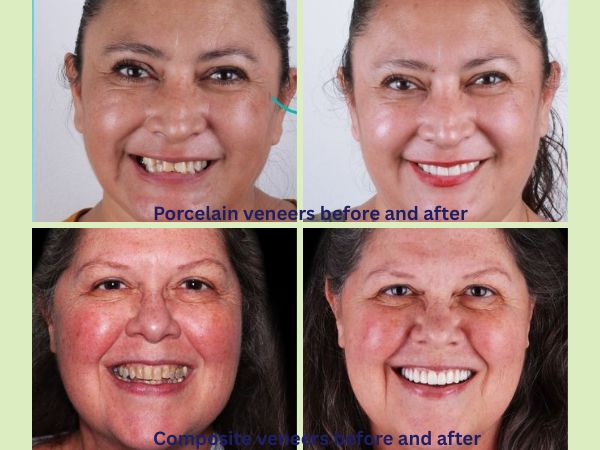
The veneers before and after photos are a visual sign that the treatment was successful. These provide visual evidence of an improved smile, with significant changes in tooth shape and color. The real transformations address a common concern among many patients: “Do veneers really work?” Seeing these amazing transformations is reassuring and helps you set realistic expectations for the treatment.
Concern
What dental veneers before and after images don’t address is something more serious. While the photographs capture the final appearance, they don’t speak about the patient's journey or what has happened from the start. Additionally, lighting, angles, and photography quality can affect how dramatic the results appear. This potentially creates unrealistic expectations.
More importantly, these don’t show the issues of teeth with veneers before and after. To be clear, two candidates may experience varied levels of comfort, long-term durability, and tooth sensitivity depending on the veneer type and enamel quality. Photographs do not address these underlying issues and are only visual signs of transformation, not a guarantee of identical results. Additionally, these do not show you the journey toward better treatment. While veneer treatment can leave permanent changes to tooth structure, it's essential to understand the full treatment process before proceeding.
What Happens Before Dental Veneer Treatment?
Understanding what happens before dental veneer treatment helps you make informed decisions. It also ensures you are better prepared for each stage of the process, both physically and mentally.
- Consultation and smile design: During the consultation, your dentist will examine your teeth. Convey your cosmetic dental concerns, and the dentist will try to understand your aesthetic expectations. They will determine your candidacy, explain the suitable veneer type (based on expectations), discuss the treatment plan, its pros and cons, along with the estimated price. Many modern clinics utilize advanced tools and technology for smile design. They use digital technology and facial analysis to map out a personalised smile that suits your face, lips, and personality.
- Tooth preparation and temporary veneers: At your second visit to the clinic, the dentist will prepare your teeth and place temporary veneers. They will remove some amount of enamel (the tooth's top layer) to make space for veneers. It may seem weird, but it's true. The teeth under veneers before and after shaved down, seem completely different. Next, your dentist will take tooth impressions and send them directly to the dental lab for fabrication of customized veneers. Your dentist will cover the shaved teeth using temporary veneers til the permanent ones are ready.
- Veneer fabrication: Dental veneers are fabricated in the dental laboratory. Skilled dental technicians use tooth impressions and digital photographs to craft custom veneers. They use high-quality dental materials to achieve natural translucency and a precise color match. Using standard shade guides will ensure better shade matching.
- Veneer fixation: Once the veneers are ready, your dentist will remove the temporary veneer shells and place the permanent ones. They use high-quality dental adhesives and high-intensity light for fastened hardening. Next, they will remove any excess dental cement (adhesive) and rough edges and will finally check the fit and bite.
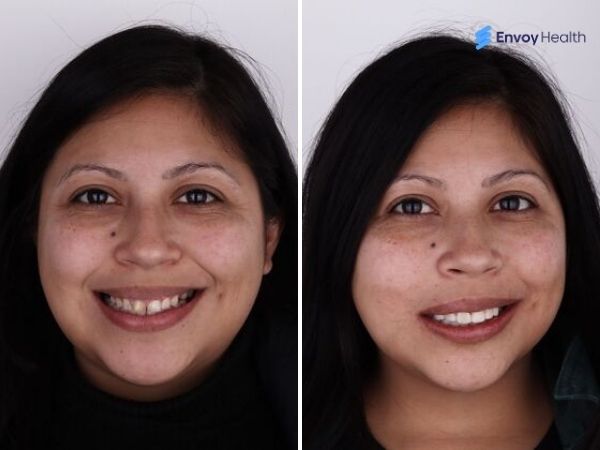
This patient had chipped, stained teeth with visible gap between the front teeth, that she had been self-consious for years. The gap drew attention, ruining her smile. Smile design experts at our partner clinics offered her a flawless, balanced smile, by combining a few dental specialities. professional whitening first to establish the right base shade, followed by crown reshaping to even out the chipped edges, and finally porcelain veneers to close the gap and unify the overall appearance. Each step was sequenced deliberately so the final veneers would blend naturally with the surrounding teeth.
What Happens After Dental Veneer Treatment?
Understanding what to expect after dental veneer treatment helps you prepare for post-treatment changes. Besides, it also helps you set realistic expectations for the results.
- Adjustment to new veneers: During the first week after veneer treatment, you may notice a new sensation as your tongue explores the new contours. Your tongue will sense the teeth slightly differently and may be slightly thicker. Your gums may feel slightly inflamed. Plus, your bite may seem slightly different initially and gets better gradually, as your jaw adjusts to new shapes. Don’t panic if you experience tooth sensitivity; it can be due to enamel removal. The condition improves, and you will feel better within a few days.
- Integrating into daily life: You will gradually adjust to the veneers and resume enjoying your favorite foods as your speech adapts. Veneers require a few maintenance tips for better longevity. You should adopt flossing and deep cleaning to prevent plaque buildup at the veneer edges.
- Regaining lost confidence: Most people start seeing veneers as a life-changing procedure within the first week after the procedure. The hesitation to attend social gatherings or appear in close-up photos often fades, helping you feel more comfortable and confident in everyday situations.
How Do You Know the Veneers Before and After Process Went Well?
A successful veneer before and after procedure is not defined solely by the results themselves. Here are a few clinical and practical signs to consider to determine whether things are in line and you are closer to a picture-perfect smile. We detailed them in two categories, treatment before and after.
Signs That Your Pre-Dental Veneer Procedure Went Well
A better smile depends not only on the output, design, and shade. It begins with a clear, transparent, and detailed consultation.
- You received a thorough consultation, not a rushed decision: Your first consultation with the dentist provides a deeper understanding of the procedure and the results you can expect. A good process involves discussion, where you and the dentist review the concerns, solutions, pros and cons, potential side effects, and the detailed veneers cost. It should not be a pressured meeting to reach a decision.
- Your expectations were clearly discussed and aligned: You should have been informed about the expected results and realistic outcomes of the treatment. Your goals should align with the dentist’s recommendations and treatment plan. When aspects such as shade, shape, and limitations are explained up front, it indicates a transparent, well-planned veneer process.
- Alternative treatment options were considered: A well-planned treatment must include discussion on various cosmetic dentistry alternatives, such as teeth whitening or bonding. Veneers should be presented only as an option, not as the sole mandatory choice.
- Minimal, careful tooth preparation: While veneer fixation requires tooth preparation, it's essential that the preparation be minimal. Your dentist should avoid aggressive tooth grinding and unnecessary tooth reduction. This will help prevent unnecessary complications such as tooth sensitivity.
- Temporary veneers felt comfortable and looked acceptable: Discomfort and instability with temporary veneers indicate poor planning. Comfortable temporary veneers that allow easy speaking, eating, and smiling indicate perfect planning and execution.
- You were informed about aftercare and long-term maintenance: Veneer treatment does not solely relate to fabricating and fixing veneers. You should clearly know about the veneers before and after costs. This means your dentist should transparently discuss the prices of pre-treatment tests and maintenance, such as professional cleanings and follow-up care. This will avoid surprise costs throughout the treatment journey.
Signs That Your Dental Veneer Procedure Went Well
We listed the signs that indicate a successful dental veneer treatment.
- Your veneers look natural, not artificial: Successful veneers come with a precise fit, neither too bulky nor too thin. They create a balanced look and seamless blend, making it harder to detect that you had dental veneer treatment. Poorly crafted veneers lack a proper fit and have rough edges. Bulky veneers, those with unnatural shades (overly white or too dark), and those with incorrect translucency create an artificial look.
- Your bite feels comfortable and balanced: Typical bad veneers before and after, causing extreme tooth sensitivity that leads to discomfort and gum inflammation. While mild, temporary discomfort after treatment is quite normal, prolonged gum irritation is a sign of bad veneer treatment.
- Gums look healthy around the veneers: Good veneers sit perfectly fitting within the jaw. They do not cause gum redness or inflammation. These appear natural and stable once your gums have healed completely.
- You eat, speak, and smile with confidence: Besides, clinical outcomes, good veneers help you talk normally, smile confidently, and eat comfortably. These changes often feel effortless and become a natural part of your daily life. For instance, you will notice the sense of satisfaction from the full mouth veneers before and after.
- Results meet realistic expectations: Your veneer treatment is a strong success when the shade, shape, and color match your expectations. These blend naturally with the surrounding teeth, lips, and facial proportions, creating a seamless, beautiful smile.
Final Word!
Veneers before and after results can be visually striking, but a successful outcome goes far beyond appearance. Understanding the eligibility criteria for veneers, what happens before and after treatment, and how to evaluate quality helps you set realistic expectations and make informed decisions. When carefully planned and placed, veneers can deliver natural-looking improvements that enhance both smile aesthetics and everyday confidence, making the veneers before-and-after transformation feel as comfortable as they look.
The veneer transformation photos can feel inspiring. But the right guidance makes the difference. At Envoy Health, we work only with carefully vetted dental clinics and patient-first treatment plans. Sign up with Envoy Health to plan your veneer journey with confidence and realistic expectations.
References
Ready to compare Smile Makeover options?
Get clinic options, pricing guidance, and recovery expectations from Envoy Health before taking the next step.
Disclaimer
The information in this article is for educational purposes only and does not replace medical advice. Always consult your doctor before starting any treatments.
Published by Envoy Health. Reviewed for patient-safety framing by Envoy Health Medical Content Review. See our editorial, AI-assistance, and medical review policy.
To request a correction, email contact@envoyhealth.io with the page URL and supporting source.
Compare reviewed clinics, pricing guidance, and recovery expectations before you commit.
Veneers typically last 10-15 years, based on the material and the health of the underlying tooth. While this applies to a general scenario, veneers are replaced immediately if they suffer breaks or chips due to stronger mechanical forces, such as biting, blows, accidents, or trauma.
For those seeking alternatives to veneers, it's worth noting that the choice depends on treatment goals. For instance, composite bonding is a better option if you are looking for an affordable alternative and want to avoid high veneer costs. On the other hand, orthodontic treatment is more effective for addressing alignment issues. But dental crowns are a better option when your teeth need cosmetic treatment and restorative support, especially when they lack internal strength due to cracks, breaks, or fractures.
While dental veneers are a highly rated dental procedure, their negatives include higher costs and irreversible removal of tooth enamel. While the expenses are not covered by insurance (since veneers are a cosmetic procedure), enamel removal can cause long-term tooth sensitivity.
Veneers usually last for 10-15 years, with porcelain veneers sometimes even extending up to 20 years (when you care for them properly). Factors such as the veneer material and the health of the underlying tooth decide the exact lifespan. Typically, porcelain veneers are more durable than composite veneers, which typically last 5 years. Additionally, a healthy tooth structure free of dental issues extends the veneer's lifespan.
Some dentists advise against veneers when the tooth enamel is insufficient to support the treatment. Dental veneer treatment is not ideal for candidates with insufficient tooth enamel, as it can lead to tooth sensitivity and long-term complications.
Teeth under veneers are ground to ensure a precise fit. They remain functional but lack the top layer and have undergone a permanent alteration. This degree of alteration makes some coverage mandatory. Means once the veneers are removed for any reason, your dentist should place fresh veneers for a continued look and seamless blend.
So, we partner with the premier healthcare facilities!



Send me the list