What Dental Plans Cover Dental Implants: A Simple Guide to Planning Your Treatment

Compare Dental Implants options before you commit
Get clinic options, pricing guidance, and recovery expectations from Envoy Health before taking the next step.

Table of contents
- How Much Do Dental Implants Cost?
- Can Insurance Help Pay for Dental Implants?
- Types of Dental Insurance That Include Implant Benefits
- Is Full Implant Coverage Ever an Option?
- What Strong Implant Coverage Typically Includes?
- Implant Coverage Options for Seniors
- How Medicare Advantage Handles Dental Implants?
- What Are The Major Clauses?
- Situations When Insurance Covers Implants
- How to Improve Your Chances of Getting Implant Coverage?
Key Takeaways
- Most dental insurance plans do not fully cover implants. When coverage applies, it is usually partial (10–50%) and limited by deductibles and annual maximums.
- Medicare Advantage (Part C) plans, offered by private insurers, may include dental implant benefits and are often a viable option for seniors and those without employer-sponsored coverage.
- Dental insurance covers implants only when strict requirements are met, including medical necessity, completion of waiting periods, pre-authorization approval, and available annual benefits.
Still comparing Dental Implants options?
Envoy can help you compare reviewed clinics, pricing guidance, and recovery expectations before you make a decision.
Dental Implant Costs
Brushing, flossing, gargling, and following the best oral health practices definitely preserve your teeth. In fact, they avoid you from catching dental cavities and periodontal issues. Unfortunately, this does not guarantee you avoid tooth loss. Tooth loss can result from a variety of causes, including accidents, trauma, advanced infections, and underlying health conditions. Dental implants are a durable, reliable, and effective solution for restoring the functions of missing teeth. But the cost of tooth implants can be prohibitive for many. It's because dental implants use high-quality materials such as titanium, rely on sophisticated technology for diagnostics and surgical procedures, and are performed by expert implantologists. But what if we say that choosing the right dental insurance can make the procedure more affordable? We will detail this in the next section.
Do Any Insurances Pay for Implants?
A short, clear answer to this question is: some do, and many do it partially. Confusing right? To be clear, dental insurance is meant to cover preventive and basic oral care. Dental implants, on the other hand, involve an invasive method and are often considered a major restorative procedure. Additionally, dental implants are a costly option for replacing missing teeth. Insurance companies view implants as an expensive alternative to affordable dental bridges and dentures, but the oral health benefits are often overlooked. Most insurance plans classify implants as elective procedures, which limits coverage and benefits. More importantly, insurance covers 10-50% of implant costs for “medically necessary implants” after deductibles and waiting period.
Here is one important point you must note. Even when the deductible and waiting periods are met, some insurance plans cover part of the procedure. Some may apply only to basic prosthesis types and exclude premium options. The key is understanding how your dental insurance policy defines implant treatment and the reimbursement requirements. For instance, the dental insurance that covers all on 4 implants, covers only a portion of the costs. It generally includes the surgery costs, abutment, basic prosthesis, diagnostic tests, and consultations. While every plan is different, most patients encounter similar rules when planning advanced dental procedures. We have provided a brief below for clarity.
- Coverage percentage for major vs. basic services: It is the percentage of the cost the insurer pays for your treatment. Generally, it is 100% for preventive care (examinations, cleanings, and X-rays), 80% for basic services (extractions, fillings, and root canals), and 50% for restorative procedures (crowns, bridges, dentures, and implants). Most insurance plans do not provide full coverage for dental implants. Instead, they offer partial coverage ranging from 10% to 50%, depending on the plan's benefits and specific components such as crowns and abutments.
- Annual maximum: The total amount the insurer will pay for your dental care within a 12-month policy period. Once this limit is reached, you are responsible for any additional treatment costs for the remainder of the 12-month period.
- Deductible: This is the amount you pay to your dentist for the implant treatment before the insurance coverage applies. Don’t worry, as the deductibles are typically low for implant treatment. Note that insurance plans with a deductible typically come with lower monthly premiums. Without a deductible, the monthly premiums are generally high, making the whole process a financial burden.
- In-network vs. out-of-network dentists: Many insurance plans have a contracted group of dentists and specialists who have agreed to reduced, pre-negotiated rates with the insurance provider. While some plans allow you to choose an in-network or out-of-network dentist, an in-network dentist will likely reduce treatment costs.
- Pre-authorization: This refers to the submission of the proposed treatment plan, including X-rays and clinical notes, to the insurance provider before services are rendered. This confirms the medical necessity, estimates patient costs, to avoid surprise out-of-pocket expenses, and protects against denied claims.
- Waiting period: The set time you must wait after enrolling in a plan and before the benefits of a certain procedure begin. Most insurance plans require a 6-12 month waiting period for dental implants. Some employee-sponsored insurance plans do not require a wait period, and your coverage applies immediately.
- Medical necessity: The medically necessary treatments are essential for diagnosing and treating the conditions that cause intense pain and restoring lost function. In most cases, these are about more than aesthetics and are crucial to health. For example, conditions in which tooth loss (due to accidents, trauma, cancer, or congenital conditions) compromised your daily activities, such as chewing and speaking clearly.
What Dental Insurance Covers Implants?
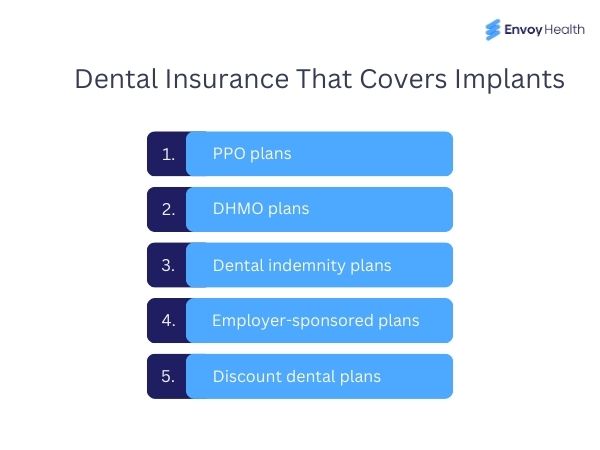
While many insurance providers cover dental implants, here are the major categories into which most plans fall.
- PPO plans: The Preferred Provider Organization plans are the most flexible type of dental insurance plans and are more likely to offer implant coverage. Implants are classified as major dental services and receive lower coverage than preventive and basic services. Coverage ranges from 10% to 50%, depending on the plan you choose. Some employer-sponsored PPO plans offer stronger benefits, including higher coverage percentages, higher annual maximums, and waived waiting periods, compared with individual plans.
- DHMO plans: These plans, offered by Dental Health Maintenance Organizations, often exclude implants. However, premium versions cover them. Unlike PPO plans, these do not have annual maximums. Instead, these use copays rather than coverage percentages. You are limited to choosing an in-network dentist, but your primary dentist may refer you to an in-network specialist if required.
- Dental indemnity plans: These plans, also called fee-for-service plans, allow you to visit any dentist (not necessarily in-network). You will initially pay the deductible, and the insurance reimburses a set percentage of the amount you have paid. While these plans offer flexibility in choosing a dentist, some exclude implants, and others apply annual maximums.
- Employer-sponsored plans: These are typically the group plans offered through the workplace. This means the dental benefits are provided by the company to its employees. This varies with the typically insurance plans. You will enroll through your employer rather than purchase dental insurance. The employee will select the insurance provider and plan options while paying a portion of the monthly premium. You will pay the remaining portion of the monthly premium via payroll deductions. This is the best dental insurance that covers implants immediately, waiving the waiting periods. However, the dentist's choice is limited, so you should select an in-network dentist.
- Discount dental plans: These are membership programs that do not operate in the same way as traditional insurance. Instead of paying a premium and receiving a fee reimbursement, you will pay an annual fee to access pre-negotiated discounted rates for your treatment. These simply lower your price, but you pay the expenses out of pocket.
Note that most of these plans offer only partial coverage, and you will be responsible for the remaining treatment costs. Annual maximums, deductibles, waiting periods, and the flexibility to choose a dentist vary by plan. In this regard, we address a common question patients ask us.
Is There Dental Insurance That Covers Implants 100 Percent?
The best dental insurance that covers implants 100 percent is exceptionally rare. While many patients seek an insurance provider that offers full coverage for implants, most plans pay only a percentage of costs and are subject to deductibles, annual maximums, and waiting periods. Full coverage in insurance terminology means they include preventive, basic, and major services. However, coverage percentages vary by service and typically do not reach 100%. So when it's not, 100%, what’s actually included in the coverage, and what's excluded. We covered this in the upcoming section.
What Does the Best Dental Insurance for Implants Cover?
Even the most premium or top-tier dental plans do not fully cover dental implants. While coverage is limited to 50% of treatment costs, it typically includes implant surgery, abutment, crown, diagnostic tests (X-rays, CT scans), and related consultations. Some plans treat the implant body, abutments, and crowns separately, which may affect your expenses. Many plans do not include additional treatment procedures, such as bone grafting, sinus lifts, and any required temporary restorations. You should pay for them out of pocket. Plus, some offer optional riders and add-ons that may include implants after a specified waiting period.
It's always better to thoroughly review the policy terms and conditions, contact your insurance provider and dentist, and proceed only after you're satisfied. Ask your dentist for a pre-treatment estimate, and check the remaining annual maximum for your treatment. This will avoid surprise costs at the end.
What Dental Plans Cover Implants for Seniors?
Seniors typically need either a Medicare Advantage (Part C) plan with dental benefits or a private PPO dental plan that includes major restorative coverage. Seniors experience tooth loss more frequently.[1] They require better insurance plans with broader coverage, though full coverage is practically impossible to obtain. Note that even these dental plans that cover implants for seniors offer partial coverage and are subject to annual maximums and waiting periods.
What Medicare Advantage Plans Cover Dental Implants?
The Original Medicare (Part A and B) does not cover dental implants. The Medicare Advantage Part C plan offered by the private insurers covers dental implants. These include UnitedHealthcare Medicare Advantage, Aetna Medicare Advantage, and Humana Medicare Advantage plans. Note that the coverage percentage is highly plan-specific and varies by insurer and state.
Know Some Major Clauses: Wait Periods and Missing Tooth
Some insurance policies include clauses regarding waiting periods and missing teeth. It's important to understand and check them in advance before planning for treatment.
Missing Teeth
Some insurance policies include a missing-tooth clause. This rule denies coverage for replacing a tooth that was lost before the policy began. Suppose you lost a tooth before enrolling in insurance. The policy's coverage does not apply to restorations such as dentures, implants, and crowns; it applies only to the tooth lost after the plan was purchased.
Waiting Period
The waiting period is one of the most common clauses in insurance policies. It is the specific time frame after which the insurance begins, but the benefits are inactive. In the United States, the typical duration for dental implants is 6 to 12 months. The clause prevents people from buying the insurance only when they need to make a claim for expensive treatment. Generally, the waiting period is determined by the treatment category. Preventive treatments such as cleaning and fillings can be claimed immediately. However, dental implants are considered major restorative procedures and require a mandatory 6-12 month waiting period.
If you're wondering whether you can exclude the waiting period, you'll need dental insurance that covers implants immediately.
What Dental Insurance Covers Implants With No Waiting Period?
Spirit Core PPO and Denali Dental are among a few dental plans that cover implants with no waiting period. Additionally, some Cigna and Humana plans offer implant coverage with no wait period. However, the coverage percentage varies by state.
While many popular plans offer better benefits, the waiting time can be annoying. The plans mentioned here cover implants without a waiting period, but they typically offer lower coverage percentages and are less common than traditional plans with waiting periods. More importantly, the terms and coverage percentages vary by state. Be sure to read the plan details carefully before buying.
When Will My Dental Insurance Cover Implants?
Dental insurance may cover implants under certain conditions. While coverage varies by plan, here are a few common requirements you should typically meet:
- Your case meets the medical necessity criteria and is not for cosmetic reasons
- Annual deductible has been met
- The waiting period has been satisfied
- The tooth was lost after the policy had begun (if the missing tooth clause is mentioned)
- Pre-authorization and pre-treatment estimates have been approved
- Annual maximum benefits are not exhausted
How Can Dental Insurance Cover Implants for Sure?
While no plan guarantees full implant coverage, you can improve your chances by choosing the right type of plan and planning treatment carefully. It’s less about “qualifying” and more about positioning yourself under a stronger policy.
Who Is Most Likely To Get Insurance Coverage for Dental Implants?
Expect coverage easily when you fall under any of these categories:
- Employee enrolled in employer-sponsored PPO plans
- Member with high-tier plans that include major restorative benefits
- An individual replacing a recently lost tooth rather than a long-missing one
- Patient who schedules treatment strategically across benefit years to maximize annual caps
Final Word!
Dental implants are one of the most effective long-term solutions for tooth loss, but insurance coverage is rarely straightforward. While some dental plans help reduce costs, most include percentage limits, annual maximums, waiting periods, and eligibility rules that affect the amount you receive. The key is to understand your specific policy before starting treatment, request a pre-treatment estimate, and plan your benefits wisely. With realistic expectations and the right strategy, dental insurance can help, even if it doesn’t cover the entire procedure.
If you’re considering dental implants and want personalized guidance on coverage, costs, and treatment options, Envoy Health can help. Our team connects you with trusted providers and walks you through insurance details so you can make confident decisions about your care. Sign up now to get tailored support and start planning your dental treatment with clarity.
References
Ready to compare Dental Implants options?
Get clinic options, pricing guidance, and recovery expectations from Envoy Health before taking the next step.
Disclaimer
The information in this article is for educational purposes only and does not replace medical advice. Always consult your doctor before starting any treatments.
Published by Envoy Health. Reviewed for patient-safety framing by Envoy Health Medical Content Review. See our editorial, AI-assistance, and medical review policy.
To request a correction, email contact@envoyhealth.io with the page URL and supporting source.
Compare reviewed clinics, pricing guidance, and recovery expectations before you commit.
Dental insurance that covers implant costs between $30 and $60 per month. These offer an annual maximum of $1,000 or $2,500 and typically pay up to 50% of treatment costs.
Dental insurance plans such as UnitedHealthcare, Humana, Cigna, and Blue Cross and Blue Shield cover full-mouth dental implants. However, none of these offers full coverage, and the coverage percentage ranges from 10% to 50%. Note that you will be responsible for the remaining costs, and the exact coverage varies based on the annual maximum, deductibles, waiting period, and monthly premiums.
Dental insurance partially covers dental implants, with coverage ranging from 10-50%, and only for medically necessary cases. Most insurance plans consider dental implants an elective procedure or a costly alternative to less expensive dental bridges and dentures.
There is no single “best” dental insurance plan for implants. The right choice depends on your individual needs, budget, and treatment timeline. A plan that works well for one person may not be ideal for another. Comparing coverage percentages, annual maximums, waiting periods, and eligibility rules will help you determine which option offers the most practical value for your situation.
So, we partner with the premier healthcare facilities!







Send me the list