Dentures Types: A Simple Guide to Choosing the Right Fit


Compare Dental Work options before you commit
Get clinic options, pricing guidance, and recovery expectations from Envoy Health before taking the next step.

Table of contents
- What Are Dentures?
- Are There Different Types of Dentures?
- Types of Dentures
- Dentures Types and Cost
- False Teeth Material Types
- What Are Premium Dentures?
- Newest Types of Dentures
- Companies that Offer the Best Quality Dentures
- What Happens During a Denture Consultation?
- How Are Dentures Made?
- How Often Are Dentures Replaced?
- Alternative Options
Key Takeaways
- Dentures vary depending on the material and the number of missing teeth. Various types include partial, complete, immediate, and implant-supported dentures. The suitable choice depends on the budget, jawbone density, and the extent of tooth loss.
- Materials such as nylon, acrylic resin, metal, and porcelain are used for denture preparation. Temporary dentures rest on the gums, while permanent ones use metal clasps, snap-in locators, and implant screws.
- Denture preparation follows a detailed dental examination, tooth impression collection, and fabrication in the dental laboratory. Advanced technology avoids messy putty and relies on digital methods, reducing chair time and enhancing precision.
Still comparing Dental Work options?
Envoy can help you compare reviewed clinics, pricing guidance, and recovery expectations before you make a decision.
Know What Dentures Are
Dentures are removable dental appliances that can replace a few or more missing teeth in the jaw. Dentures feature artificial teeth with a gum-colored acrylic base. These look just like natural teeth, making it hard to tell you're wearing an artificial set. Typically, dentures are custom-crafted devices designed by skilled dental technicians in a dental laboratory. Customization refers to the shape, color, and fit of dentures. The denture base either rests on an empty jaw (for dentures with metal clasps) or on metal implants fixed within the jaw (implant-supported). These restore your ability to chew food and speak clearly, and support the facial structures, preventing sagging.
Are There Different Types of Dentures?
Dentures are never a one-size-fits-all solution. Different types of dentures are available. They primarily vary based on the intensity of tooth loss, jawbone health, and lifestyle needs. Dental technicians craft them using materials such as acrylic, resin, metal, nylon, and porcelain. Furthermore, they are specially designed to fill in gaps or replace all teeth. A few are designed specially to offer better stability and comfort. It's crucial to learn the features of various types of dentures before making a choice.
What Are the Four Types of Dentures?
Nowadays, partial, complete, implant-supported, and immediate dentures are the most commonly used dentures in the United States. These different denture types vary considerably in their features. We detail each of them below.
Partial Dentures
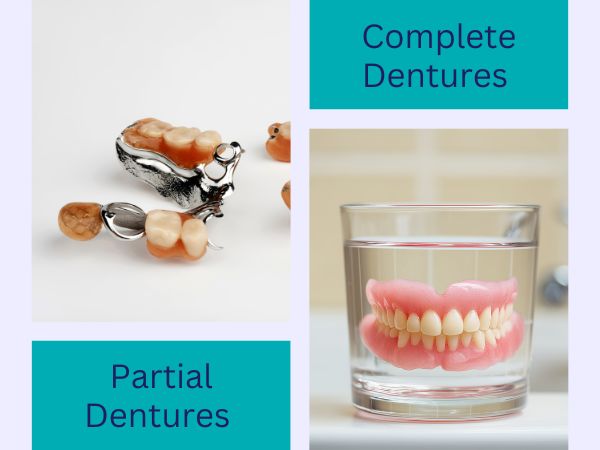
These are removable dental appliances that replace one or a few missing teeth. Partial dentures come with artificial gums, teeth, and metal clasps that hook onto the remaining natural teeth. These are ideal when you have a decent number of healthy teeth and a few missing teeth. In fact, they can be a practical option when looking for affordable fixes compared to invasive implants or dental bridges. Partial denture types may be removable or fixed and vary depending on the material. Cast metal, acrylic, and flexible partial dentures are the most commonly used types. Metal partial dentures feature a strong cobalt-chromium framework. The metal clasps are hooked to the remaining natural teeth.[1] On the other hand, budget-friendly acrylic partial dentures feature a plastic base. These are held by metal hooks or plastic clasps and are generally called “flippers”. Acrylic partial dentures are ideal for temporary purposes and smaller tooth gaps. The other partial denture type, flexible dentures, is made from flexible resin with tooth-colored clasps. While the softer resin offers a comfortable fit, it is less durable and less sturdy.
Complete Dentures
These traditional dentures replace all of your teeth by resting on the gums. Complete dentures appear as a full set of teeth for an entire jaw and include a pink gum base that supports artificial teeth. They snugly fit over the natural gums and offer a comfort fit. The different types of full mouth dentures vary depending on the material used to make them. Commonly used materials include porcelain, acrylic, metal, zirconia, and 3-D printed resins. While the metal-based chromium and cobalt framework offers durability, complete dentures made from porcelain and acrylic are more natural and offer comfort fit. However, the flexible nylon-based and polycarbonate-based complete dentures are for temporary needs.
Implant-Supported Dentures
These advanced dentures offer better comfort, a stable fit, and come with enhanced durability. Implant-supported dentures are anchored to metal implant posts through a secure foundation. The dentures are either snapped or clipped onto implants for a better fit. The dental implants support jawbone health, preventing bone resorption and helping dentures maintain a good fit over time. Note that implant dentures types primarily differ in their retention methods. These come in various models, fixed and removable. Removable dentures (either ball- or bar-retained) can be easily removed for cleaning. While ball-retained, snap-in dentures have snap-in locators that fit into corresponding sockets, the bar-retained dentures have a metal bar connecting implants and denture clips. Fixed dentures are hard to remove; only dentists can remove them. The dentures are permanently attached to the implants using metal screws. Dentists plan the strategic placement of implants to better distribute bite force. Implant-supported permanent dentures are usually of the all-on-4, all-on-6, 3-on-6, and all-on-8 types. The cleaning and other maintenance are similar to your routine oral healthcare. These offer a precise fit, a natural feel, and better function.
Immediate Dentures
These are the removable temporary dentures placed right after tooth extraction. These serve as artificial teeth until your jaws heal and are ready for permanent dentures. Immediate dentures improve facial aesthetics and restore your ability to chew and speak clearly after tooth extraction procedures. These primarily vary based on function, either as conventional or interim immediate dentures. Conventional dentures are fabricated before tooth extraction, and are intended to serve as permanent teeth until the jaws heal. The interim dentures, on the other hand, are for short-term use and are inserted immediately after tooth extraction on the same day.
Types of Dentures and Cost
Denture costs vary considerably depending on the types of dentures materials and the number of missing teeth. While costs typically range from $450 to $5,000, false teeth types also differ in comfort, design, durability, and long-term value.
Know the False Teeth Material Types
While most people focus on dentures types and prices, the real concern isn’t just about the price but also about comfort. Generally, artificial teeth are made of porcelain or acrylic resin. However, denture base materials include porcelain, acrylic resins, metal alloys, and flexible polymers. The acrylic resin and flexible polymers are lightweight and offer a comfortable fit. Metal alloys like cobalt-chromium offer better strength and durability.
Apart from the basic types based on materials, many clinics also quote different prices for standard and premium dentures. It’s important to understand the difference between the two.
What Are Premium Dentures?
Premium dentures are high-quality, customized dentures that typically come with higher price tags. These are crafted using advanced acrylics that offer better fit, low weight, and comfort. The fabrication procedure follows advanced digital methods of precise impression collection. The customization also relies on advanced techniques to achieve a more natural, polished look. Most often, these are designed layer by layer using advanced injection systems. The goal is to fit the shade and contour of the natural gums and teeth.
What Are the Newest Type of Dentures?
Thanks to advanced dental technology, the old, heavy dentures are a thing of the past. The new types, such as digital 3-D-printed dentures and implant-supported dentures, are a better option nowadays. Avoiding the messy mould-based impression collection not only reduces the chair time but also makes the procedure comfortable. It also offers higher precision and enhanced functionality that are lacking in a traditional casting procedure. These feature hyper-realistic aesthetics and better fit models that rely on snap-in locators. Advanced dentures do not cause slippage or weight-related discomfort in the gums. They look and feel natural, so you don’t have to struggle. Just focus on a better, higher-quality life.
Which Companies Offer the Best Quality Dentures in America?
Dentures are customized prostheses crafted to meet the individual's needs. These are not readily designed, so looking for companies offering the best dentures does not make sense. Instead, you can look for trustworthy dental clinics and qualified, experienced dentists offering premier dental services. Clinics with in-house dental labs work the best. You can expect realistic dentures with a better fit from skilled dental technicians and clinics relying on advanced digital technology.
How Does Your Denture Consultation Go?
Your dentist consultation for dentures follows a thorough oral examination. This is to assess your oral health and dental needs. Your dentist will physically examine your oral cavity for visual signs of decay, gum infections, and inflammation. They also consider the number of missing teeth to decide on the type of denture you will require. This will be followed by diagnostic imaging, including dental X-rays. These capture details of the jawbone's density and volume, its health, the relationship between the upper and lower jaws, and how both jaws fit together. During the initial consultation, it's crucial to discuss your requirements and understand various denture options. Your dentist will explain the pros and cons of different denture types. You should choose the option that best suits your dental and aesthetic requirements and budget expectations.
How Are Dentures Made?
Dentures are customized prostheses, meaning they are crafted to fit your oral cavity and dental needs.
Collection of Tooth Impressions
The procedure for denture crafting begins with the collection of dental impressions and their submission to the dental lab for fabrication. Dentists collect the teeth impressions of the upper and lower jaws. This includes the gums, jaws, and remaining teeth. They either use dental putty or digital methods to capture dental impressions. Traditional putty methods use custom trays made from quick-setting materials such as alginate. The digital methods, on the other hand, are simpler and use a handheld wand with a camera or a light emitter. These are moved over the teeth and gums to capture precise 3-dimensional models. The images are sent directly to the dental laboratory for prosthesis fabrication.
Denture Customization
While conventional crafting methods used wax models and manual polishing, advanced technology replaced them. Nowadays, dental technicians create precise dentures using CAD/CAM software and 3-D printing and milling. Both methods offer similar functionality.[2]
How Often Do Dentures Need To Be Replaced?
Typically, dentures last about 7 to 10 years and should be replaced as they wear down, no longer fit properly, or stop providing comfortable support due to changes in the gums and jawbone. While some experience issues after 5 years, it's crucial to note that proper maintenance prolongs their longevity. Some candidates may experience denture loosening over time, increasing the risk of them slipping. Dentists suggest relining or rebasing, depending on the jawbone health.
Alternative Options: What’s Better Than Dentures?
Dental implants are considered a better choice compared to dentures. While dentures are a cost-effective tooth-replacement option, they do not improve jawbone health. Dental implants, on the other hand, act as artificial tooth roots and prevent jawbone loss. Dentures can slip over time as the jawbone deteriorates, and candidates may require reliners to improve fit. Moreover, dental implants are a more stable and durable solution. But these come with expensive price tags, unlike more affordable dentures.
Final Word!
Choosing the right dentures is not just about replacing missing teeth. It’s about comfort, stability, confidence, and protecting your long-term oral health. By understanding the different dentures types, you can make a decision that fits your needs today and continues to work for you in the years ahead. Each option serves a specific purpose, which is why comparing them carefully and seeking expert advice can make all the difference in how your dentures feel, function, and last.
Get clear guidance on dentures types and treatment options, backed by experienced professionals who help you move forward with confidence. Sign up with Envoy Health to get started. Your flawless, confident smile is just a click away!
References
Ready to compare Dental Work options?
Get clinic options, pricing guidance, and recovery expectations from Envoy Health before taking the next step.
Disclaimer
The information in this article is for educational purposes only and does not replace medical advice. Always consult your doctor before starting any treatments.
Published by Envoy Health. Reviewed for patient-safety framing by Envoy Health Medical Content Review. See our editorial, AI-assistance, and medical review policy.
To request a correction, email contact@envoyhealth.io with the page URL and supporting source.
Compare reviewed clinics, pricing guidance, and recovery expectations before you commit.
The best type of dentures depends on the candidate's degree of tooth loss, dental and aesthetic requirements, and budget. The ideal choice is the one that offers a better fit, delivers an efficient bite and speech clarity, and is not bulky on your gums. Removable partial dentures with snap-in locators are a better choice if you are looking for a solution for partial tooth loss. However, implant-supported dentures are ideal when the tooth loss is complete, and you are looking for a durable solution.
Removable partial dentures made from acrylic or metal are an ideal choice for replacing three missing teeth. Many dental professionals also recommend dental bridges as an alternative to dentures.
Implant-supported dentures are a stable and durable solution compared to the tradition dentures. Traditional dentures have a pink base with artificial teeth and rest on the gums. You should adopt specialized cleaning procedures to improve longevity. Implant-supported dentures, on the other hand, are fixed to metal implant posts, and dentists screw them tightly in place. These behave much like natural teeth, and maintenance follows the routine oral care.
Removable dentures rest on the gums or implants and can be removed. These are more affordable choices and better suited to a weaker jawbone. Fixed dentures are retained by implants, offering greater stability and enhanced function. Removing them is quite difficult; only a dentist can do so.
So, we partner with the premier healthcare facilities!







Send me the list