Laser Eye Surgery For Lazy Eye: What It Can And Can’t Fix

Compare Eye Surgery options before you commit
Get clinic options, pricing guidance, and recovery expectations from Envoy Health before taking the next step.

Key Takeaways
- Laser eye treatment for lazy eye is not a true solution. Surgical lasers can correct the refractive errors, but not the underlying brain-eye connection, which is a key cause for amblyopia, also called lazy eye.
- The surgery to fix lazy eye in adults has little to do with brain-eye connections. Relying on brain training rather than surgery alone yields better results. Early intervention in early childhood, when neurological pathways are still developing, yields the best outcomes.
- Vision therapy, eye patch treatment, perceptual learning, and transcranial magnetic stimulation are the non-surgical approaches to correct the brain connections. These reduce the brain's reliance on the stronger eye and strengthen the processing of visual information from the weaker eye.
Still comparing Eye Surgery options?
Envoy can help you compare reviewed clinics, pricing guidance, and recovery expectations before you make a decision.
Understanding Lazy Eye or Amblyopia
Lazy eye is often confused with crossed eyes (squint). But the truth is that crossed or squint eyes are more of a physical condition where one or both eyes turn inward or outward, rather than simultaneously aiming at the same object. However, lazy eye is the simpler term for amblyopia, in which the brain habituates to process visual information from a single eye.
What Causes A Lazy Eye?
The underlying cause for lazy eye, in most cases, is a physical issue, such as crossed eyes, droopy eyelids, or a major refractive error in one eye. In any of these conditions, the visual information from the two eyes differs because they do not simultaneously track the same object. With this difference, the brain begins to rely on visual input from one eye, ignoring the other. Gradually, this leads to stronger brain-eye connections in the dominant eye and reduced visual function in the other.
Because some of these causes are refractive and correctable, many assume modern treatments are a solution for lazy eye. Plus, with technological advancements, laser treatments have become a common choice in ophthalmology, mainly because they are minimally invasive with a quick recovery. This often leads to a key question from patients: Does laser eye surgery work for lazy eye? We address this in the next section.
Does Laser Eye Surgery Fix Lazy Eyes?
Laser eye surgery does not fix the lazy eye condition because it's a problem with the brain's connection, not solely with the eye’s structure. Laser eye surgeries actually correct the shape issues of the eye lens and cornea. Lasers actually correct the eye's refractive errors and reduce a candidate’s reliance on glasses. It does not address the underlying brain-eye connection responsible for lazy eye. Another important factor is timing. Laser eye surgeries are considered for adult individuals aged 18 years and above. Lazy eye, on the other hand, requires early intervention when the child's brain is still developing, making it a non-reliable option.
However, this does not mean that lasers do not have a real role in treating patients’ lazy eye. There are situations where they are still relevant.
When Can You Get Laser Eye Surgery For Lazy Eye?
You can get laser eye surgery for amblyopia eyes, provided the goal is visual improvement, not a cure. First, you should know that laser surgery is not a cure for lazy eye (a neurological condition that involves the brain and the eye). It can only improve the vision by correcting any existing refractive errors. Here are the two instances when laser treatment is considered for lazy eye.
- The eye has major refractive errors: Your eyes (either the weaker or dominant eye) have refractive errors, such as near-sightedness or farsightedness. Getting laser treatment can correct them and give you better vision without glasses. And the life gets easier!
- You are over 18 years old and have a stable vision: A stable eye prescription for over 6 months is mandatory. It's because laser procedures generally reshape the cornea, and any future changes in prescriptions can make the correction less accurate over time.
The outcomes of the choice include improved vision and correction of refractive errors in one or both eyes. The overall output is reduced reliance on glasses and contact lenses, leading to a simpler, more comfortable, and easier life.
What Can Fix A Lazy Eye?
While lasers aren’t the actual cure for lazy eyes, here we detail a few age-wise fixes for amblyopia:
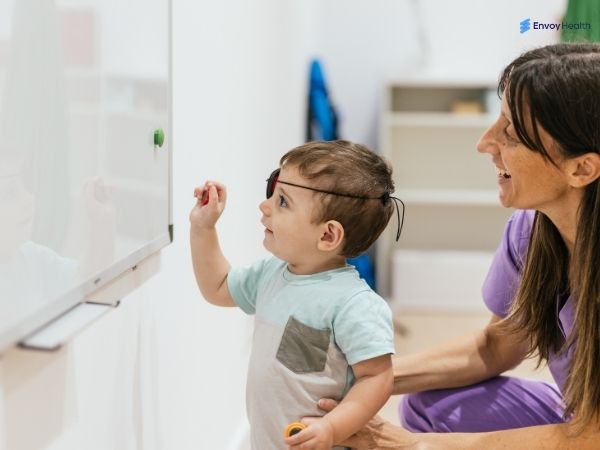
- Eye patching: This is part of early treatment, especially in children whose brains are still developing. Ophthalmologists cover one eye with a patch for several hours a day. This aims to help the child see through the weaker eye and force the brain to develop neural connections using visual input from that eye.
- Vision therapy: This includes specialised structured training programs to stimulate the weaker eye. Ophthalmologists recommend eye exercises (aiming eye tracking, near-far focus switching), lenses, and filters to improve the weaker eye's visual efficiency. Vision therapy is generally recommended for younger as well as older children.
- Perceptual learning: It includes non-invasive computer-based brain therapies, often presented as interactive games. These focus on visual acuity, color sensitivity, and stereopsis to force the brain to combine input and stop suppressing the weaker eye. This way is ideal for older children and also adults.[1]
- Transcranial Magnetic Stimulation: This method is most commonly recommended for adults and uses transcranial magnetic pulses to stimulate the visual cortex. It increases the neuroplasticity in the adult brain and helps rebalance the input between the two eyes.[2]
Common Myths Around Laser Eye Surgery For Lazy Eye
While laser eye surgery is widely known for its high success rates, several misconceptions persist about its role in treating lazy eye. Let’s clear up some of the most common ones below.
- Myth: Laser surgery makes both eyes work together
- Truth: Even after laser eye correction, both eyes fail to work together. Each produces its own visual information, and it's the brain that processes it. So you will need to train your brain to help both eyes work together.
- Myth: Can LASIK cause lazy eye?
- Truth: No, LASIK eye surgery for lazy eye is neither an appropriate treatment method nor the exact cause. Lazy eye is actually a developmental issue originating in the brain. It develops gradually, generally for children below the age of 8 years. On the other hand, LASIK is performed on individuals over the age of 18. It majorly corrects the refractive errors of the eye by reshaping the cornea. It has little to do with the brain’s neurological connections. So LASIK is generally not recommended for correcting lazy eye. Moreover, the risks of LASIK with amblyopia extend to dry eyes, glare, halos, and surgical site infection.
- Myth: Getting laser surgery strengthens the weaker eye.
- Truth: Surgical lasers correct the refractive errors or shape issues. While this sharpens the vision, candidates require non-surgical treatment, such as eye patching and vision therapy, to reduce the brain's reliance on the weaker eye’s visual input.
Final Word!
Laser eye surgery fix lazy eye is often misunderstood. While it can improve overall visual clarity by correcting refractive errors, it is not a treatment for amblyopia. Lazy eye stems from how the brain processes and prioritizes visual input, not just from structural issues in the eye. Although factors like crossed eyes, droopy eyelids, or uneven vision can contribute, the condition develops when the brain begins to rely on one eye over the other. As a result, laser surgery cannot restore the brain-eye coordination needed for proper vision.
If you’re looking for laser eye surgery or other treatment options, getting the right guidance matters. At Envoy Health, we connect you with trusted specialists and support you through every step, from consultation to recovery, so you can make informed decisions with confidence. Sign up today and gain clarity on your options, personalized recommendations, and access to care that truly fits your needs.
References
Keep researching cataract and eye surgery
Explore the full cataract and eye surgery topic hubReady to compare Eye Surgery options?
Get clinic options, pricing guidance, and recovery expectations from Envoy Health before taking the next step.
Disclaimer
The information in this article is for educational purposes only and does not replace medical advice. Always consult your doctor before starting any treatments.
Published by Envoy Health. Reviewed for patient-safety framing by Envoy Health Medical Content Review. See our editorial, AI-assistance, and medical review policy.
To request a correction, email contact@envoyhealth.io with the page URL and supporting source.
Compare reviewed clinics, pricing guidance, and recovery expectations before you commit.
It's never too late to fix strabismus or a crossed eye. Since it's a condition related to eye alignment, strabismus surgery aims to correct the alignment of the eyes so that both eyes focus on the same object at the same time. However, early intervention yields better results for developing 3D vision.
Lazy eye surgery or strabismus surgery is worth it when you aim for changes with the physical orientation of the eyes. The surgery loosens or tightens the eye muscles that hold the eyeball to ensure proper orientation. Amblyopia, or lazy eye, typically involves a problem with the brain’s processing of visual information. So, getting surgery does not solely help, as you will need to train your brain through vision therapy, eye patching, perceptual learning, and transcranial magnetic stimulation. Surgery aimed to correct the physical condition, followed by appropriate rehabilitation, is definitely worth it. However, note that the earlier the treatment intervention, the better the outcomes.
Yes, you can get laser eye surgery for lazy eye, provided you understand that surgery can only correct the eye's refractive issues, but not the underlying brain connections. In addition, it's important to note that, to undergo laser eye surgery, you should be 18 years or older.
Laser surgery does not fix a squint. Surgical lasers can correct corneal and lens shape issues and aim to resolve refractive problems. Squint eyes are typically due to eye muscles holding the eyeball too tightly. Surgery to correct squint is different from laser eye surgery.
Treatment to permanently fix the lazy eye should start during early childhood. It's because the brain begins to rely on the stronger eye for better vision in the early years of life. Treatments include eye patching and vision therapy for children. For young adults, ophthalmologists recommend transcranial magnetic stimulation and perceptual learning.
So, we partner with the premier healthcare facilities!
Send me the list