Are Dental Implants Painful? What You Need To Know


Compare Dental Implants options before you commit
Get clinic options, pricing guidance, and recovery expectations from Envoy Health before taking the next step.

Table of contents
- Overview of the Dental Implant Procedure
- Pain During Dental Implant Surgery: What to Expect
- Post-Surgery Pain and Recovery Timeline
- Managing Pain After Dental Implants
- Does Dental Implant Pain Ever Go Away?
- Signs of Abnormal Pain
- Common Causes
- When Dental Implants Cause Long-Term Discomfort?
- Comparing Dental Implant Pain to Other Procedures
Key Takeaways
- The dental implant surgical procedure is carried out under local anesthesia. The procedure is virtually painless, with slight post-procedural discomfort that is largely manageable.
- Pain killer medication, simple at-home steps, and a soft, liquid diet help gum healing during the early recovery post-implant surgery.
- The worst part of dental implant procedure is not the pain but failing to adhere to the post-procedural care. The gums should heal, and the dental implants require appropriate care for effective osseointegration. Neglecting this can lead to implant failure necessitating a repeated surgery.
Still comparing Dental Implants options?
Envoy can help you compare reviewed clinics, pricing guidance, and recovery expectations before you make a decision.
What Does Dental Implant Treatment Involve?
Dental implant treatment involves a surgical procedure performed by a qualified, experienced dental implant specialist. Tooth implants are tiny screws made from zirconium or titanium. Dentists will fix them surgically within the jawbone. These are fixed in the spaces left by missing teeth.
During the implant surgery, your dentist will make gum incisions to gain access to the underlying jawbone. Implants are drilled into the jawbone, and the incisions are closed using sutures. The gums are allowed to heal. The implants will gradually form a strong bond with the surrounding jawbone. This is osseointegration, a slow process that takes around 6 months. But note that osseointegration is crucial for the success of dental implants. After healing, your dentist will fix screw-like abutments on the implants. These hold the artificial teeth in place, and this step involves a minor surgical procedure. The dentist will make thin incisions along the gums and fix the abutment screw. At this point, it’s natural to wonder, “Are dental implants painful to get?” If that’s on your mind, you’re in the right place. We discussed this in the upcoming section.
Are Dental Implants Painful To Have Done?
Dental implant surgery is virtually painless. Dentists carry it out under local anesthesia, so you won’t feel much pain or discomfort. It's worth mentioning that dental implants pain level is much lower compared to the pain you might experience during tooth extraction.
The implantologists will numb your gums before the dental implant surgery. So most patients won’t feel any pain while still being awake and aware of what is happening around them. Some dentists recommend sedatives in addition to the local anesthetic. This is particularly beneficial for candidates suffering from dental anxiety. Sedatives offer a sense of relaxation and ease any discomfort during the procedure.
Are Dental Implants Painful After?
Most patients experience some discomfort as the local anesthetic wears off, typically within 2-3 hours after the procedure. Mild pain, swelling, and slight bleeding are common during this time.
Right after surgery, you’ll usually remain at the dental clinic for a short period of 3-4 hours. Your dentist will monitor your condition and ensure everything is stable before you head home. They will prescribe pain medications and antibiotics that you should use for 3-5 days. Gum soreness and sensitivity gradually subside with time. Within 7-10 days, you will feel normal and can resume routine activities. However, it’s important to be mindful of your diet and follow post-operative care instructions closely. The implant site is still healing, and any disturbance can affect how well the implant bonds with the jawbone.
Dental Implants Pain Management
Here we detail a few at-home tips to help mitigate dental implant pain in the early days of recovery.
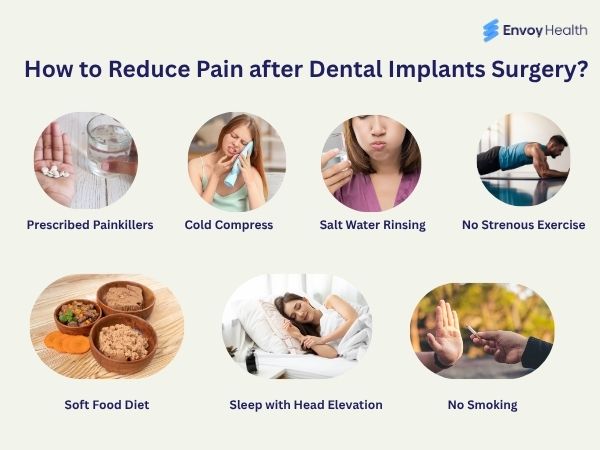
- Pain medication: Use the prescribed dental implants pain medication or over-the-counter analgesics to mitigate pain due to surgical incisions. Ibuprofen and acetaminophen are effective. However, it's better to consult your dentist before using them for your case.
- Cold compress: Hold an ice pack to your cheek near the surgical site. This will slow the blood flow to the incisional site and reduce the pain, swelling, and inflammation. Regular application for 10-20 minutes, with a 10-20-minute break, will help early recovery during the initial 48 hours after surgery.
- Saltwater rinses: Gently rinse your oral cavity with warm saltwater during the first 24 hours after surgery. It will soothe sensitive tissues and help in reducing tissue swelling. While it also cleanses the oral cavity and reduces the risk of infection, take care not to suction or swish too forcefully. This pressure can potentially disturb the implant orientation.
- Sleep with head elevated: Use a pillow or sleeping bag to keep your head elevated while you rest. This will reduce tissue swelling and discomfort, making your early recovery smoother and simpler.
- Avoid strenuous physical activity: Refrain from going to the gym or performing strenuous physical exercises for 7-10 days after dental implant surgery. Physical activities increase the heartbeat and elevate blood pressure. This may loosen the blood clots and disturb the pace of early recovery. It's better that you avoid strenuous physical activities for a few days until you initially recover.
- Refrain from smoking and alcohol consumption: Avoid smoking and alcohol consumption 2-3 weeks before dental implant surgery. These restrict the blood supply and limit the delivery of oxygen and nutrients to the body. This will impair the body’s healing capacity after implant surgery, raising the risk of infection and failure. [1]
- Liquid foods and soft diet: After dental implant surgery, start with liquid foods such as smoothies, cold soups, shakes, and ice cream for the first 3-4 days. Slowly transition to mashed potatoes, avocados, pudding, and applesauce. Easy-to-chew foods such as scrambled eggs, oatmeal, and cooked veggies are also good choices for satisfying nutritional needs. Remember to drink liquid foods using an open cup. Avoiding too hot or too cold foods, and straw usage for a few days will help with better recovery. After transitioning to solid foods, avoid hard, crunchy chips, crackers, and nuts. Strong chew and bite forces may dislodge the dental implants, leading to implant failure.
Note that these measures not only help you manage pain but also help your gum tissues heal and aid in early recovery. If you’re wondering whether dental implant pain lasts forever, it’s a common concern. We’ve covered it in the next section.
Do Dental Implants Hurt Forever?
No, pain after a dental implant lasts for only a few days after surgery. Dental implants do not hurt forever. Typically, the redness, soreness, and pain in the gums last for 5-7 days. However, you may still experience slight bruising, tissue swelling, and blood clots for a few more days. These subsides eventually, and you will feel better.
How Do I Know If The Pain After Dental Implant Surgery Is Abnormal?
Typically, most patients feel a slight pressure or vibration during dental implant surgery. Post-surgical dental implant pain is generally dull, throbbing at the incisional site. Further, most patients experience tenderness and soreness that gradually fade with pain medication and time. However, any sharp, intense, deep pain or one that is prolonged or sustained for 2 weeks following dental implant surgery is abnormal.
What Causes Abnormal Pain Due To Dental Implants?
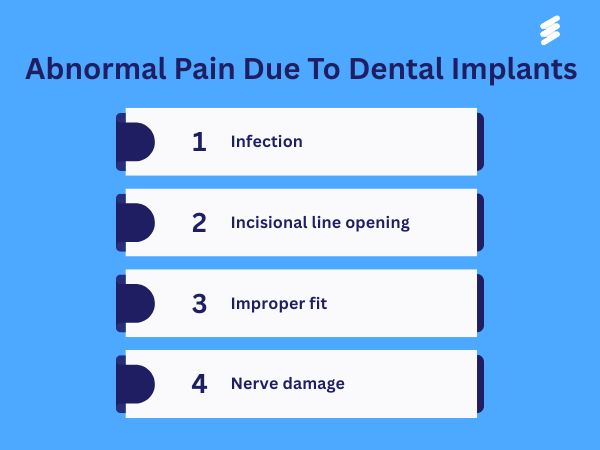
Abnormal pain due to dental implants can be due to any of the following reasons:
- Infection: Bacterial buildup around the incisional site may allow entry into the surgically impacted tissues. This causes internal tissue changes that present as persistent pain and inflammation. Besides, peri-implantitis can occur due to compromised oral hygiene, with its effects being more serious, even leading to bone loss and implant replacement.
- Incisional line opening: This occurs due to wound dehiscence, exposing the healing tissue, underlying bone, or the implant itself to the surrounding oral environment. Dentists physically examine the implant site and suggest a chlorhexidine rinse. In addition, antibiotics will be prescribed for a few days to prevent infection.
- Improper fit: Well-positioned implants osseointegrate, forming a strong bond with the surrounding jawbone. Lack of planning or precision in surgical practice causes improper implant positioning.
- Nerve damage: Implants placed too deep into the jawbone can penetrate or compress the underlying nerves. It can happen due to overdrilling or poor surgical planning, ignoring the nerve positioning. The pain is generally accompanied by a numbness and tingling sensation.
When Are Dental Implants Painful Long-Term?
Dental implant pain fades within 10 days, however, slight discomfort when you apply bite pressure is still normal. Persistent dental implants pain after 10 days is generally abnormal. It can occur due to an implant site infection. Early intervention prevents unnecessary consequences.
Tooth implant pain after 10 years can be due to implant loosening, failure, or peri-implantitis. Although rare, dental implants may fail to fuse properly with the jawbone, leading to loosening or failure. It requires immediate attention and may require implant re-surgery.
On the other hand, peri-implantitis occurs when bacterial plaque deposits around the implant surface due to poor oral hygiene. Candidates with a history of gum disease or those who smoke have a peri-implantitis risk. The condition is serious and needs prompt treatment. See your dentist immediately when you notice inflammation, redness, swelling, and pus around the implant site years after surgery. Delay may lead to progression of infection with significant tissue and bone loss.
Are Dental Implants Painful To Install Compared To Other Dentistry Procedures?
While the idea of surgically placing a screw into the jawbone may sound intense, the actual procedure is usually less painful than most people expect. To give you a clearer perspective, we detailed how dental implant pain compares to other common treatments and what you can expect from each.
- Pain caused by implants vs. tooth extraction: Pain from dental implants is generally less, although the procedure is more invasive than extraction. Implant surgery is more controlled, and most patients feel comfortable during the procedure.
- Pain caused by implants vs. root canals or fillings: The post-procedural pain and discomfort from dental implants is typically more severe than that from dental fillings or root canal procedures. RCT and fillings are minor procedures that are intended to relieve pain caused by tooth cavities. So most candidates do not complain of much pain. They feel relieved within 1-2 days following the procedure.
- Pain caused by implants vs other restorative treatments: Generally, restorative procedures aim to replace and restore damaged teeth, primarily to restore lost tooth functions. Crowns, dentures, and bridges are alternative restorative dental procedures. However, these minor procedures do not cause much pain compared to dental implants.
Final Word!
Dental implant surgery may sound overwhelming, but the reality is far more manageable than most people expect. With proper anesthesia, guided techniques, and post-operative care, the discomfort is usually mild and temporary. Understanding what’s normal and what’s not can make a big difference in how confidently you approach the procedure. In the end, knowing what to expect helps you stay prepared, follow the right care steps, and ensure a smoother recovery. Dental implants are, in fact, a long-term investment in your oral health, and a little short-term discomfort is often a small trade-off for lasting results.
Taking the next step feels easier with the right support. Envoy Health connects you with trusted dental clinics, transparent pricing, and personalized guidance, so you can plan your dental implant journey with clarity and confidence. Sign up with Envoy Health to connect with trusted dental clinics, get transparent pricing, and personalized support for your implant journey.
References
Ready to compare Dental Implants options?
Get clinic options, pricing guidance, and recovery expectations from Envoy Health before taking the next step.
Disclaimer
The information in this article is for educational purposes only and does not replace medical advice. Always consult your doctor before starting any treatments.
Published by Envoy Health. Reviewed for patient-safety framing by Envoy Health Medical Content Review. See our editorial, AI-assistance, and medical review policy.
To request a correction, email contact@envoyhealth.io with the page URL and supporting source.
Compare reviewed clinics, pricing guidance, and recovery expectations before you commit.
Dental implant treatment is typically more costly than other dental restorative procedures. Implant surgery requires sophisticated diagnostic tools and specialized dental X-rays. Besides, dental implants are composed of high-quality dental materials, altogether making the procedure expensive. The cost of a dental implant ranges between $3,000 and $6,000 in the United States.
Tooth implants are a safe procedure with the least side effects and high success rates. Implants are made from biocompatible materials that are well-tolerated by the body. However, proper planning and surgical expertise play an important role in the success of implants. Note that cases of inappropriate surgical techniques and improper candidate selection can result in complications.
Dental implants offer long-term, permanent results. The implants, once fixed within the jawbone, form a strong, irreplaceable bond with the surrounding bone tissue. This forms the base for the implants. However, dental crowns, bridges, or dentures placed on implants require replacement every 10-15 years. This depends on the type of prosthesis and the aftercare measures followed.
Dental implants mimic natural tooth roots with no extra effort. All you need to do is care for them same as you would do for your natural teeth. Brushing teeth twice daily and flossing regularly help keep the oral cavity free of germs and plaque. Over long-term implants integrate into the jawbone and form a secure foundation that feels much like natural teeth.
The downside of getting dental implants is the possible complications due to improper planning and inability to follow aftercare instructions. Infection, nerve damage, delayed bone healing, and prolonged bleeding are a few avoidable downsides of getting dental implants.
Pain after a dental implant surgical procedure lasts for the first 4-5 days. You will use pain medication and follow basic aftercare pain mitigation steps. Ibuprofen and acetaminophen are the common analgesics used to deal with the pain due to dental implants. In addition, cold compresses, sleeping with the head elevated, and relying on a simple liquid diet ease early recovery after dental implant surgery.
No dental implant surgery is carried out under local anesthesia. You will be awake and will be aware of what's happening around you during the procedure. Candidates suffering from anxiety due to the procedure are recommended sedatives alongside a local anesthetic. These offer a sense of relaxation, easing any discomfort during the procedure.
The worst part of getting dental implants is the long healing time and failing to follow the aftercare measures. While the initial recovery of the gum tissues lasts 7-10 days, the implant forms a stable, secure bond with the jawbone over 6-9 months. During this period, strong chewing forces may dislodge the implants, and poor oral hygiene can lead to infections. Strict adherence to the aftercare measures following dental implant surgery requires continued effort over a few months.
So, we partner with the premier healthcare facilities!






Send me the list