What Are Dentures Made Of? Which Options Work Best, And Which Don’t


Compare Dental Work options before you commit
Get clinic options, pricing guidance, and recovery expectations from Envoy Health before taking the next step.
Table of contents
- Denture Materials
- Materials Used in Partial Dentures
- How Denture Materials Have Evolved?
- Best Denture Materials
- Does Maintenance Depend on Material?
- Choosing the Right Denture Material
- Can Dentures Cause Heartburn?
- Denture Material and Allergies
- Biggest Problem With Dentures
- How Full Dentures Stay in Place?
- What Denture Tablets Contain?
- How Denture Materials Affect Cost?
Key Takeaways
- Dentures have a pink-colored base that holds artificial teeth. The material used to make dentures can influence their comfort, durability, longevity, and overall cost.
- The denture base is commonly made from polymethyl methacrylate (acrylic resin), which is lightweight and comfortable, while metal alloy bases offer greater strength and support for stronger chewing forces. Acrylic dentures are for people with metal-related allergies. Artificial teeth are usually made from acrylic resin or porcelain, with porcelain often preferred for its natural shine.
- Choosing the right denture material also affects long-term care. Dentures require regular cleaning, and using the correct cleansing products for the material helps maintain their durability and lifespan.
Still comparing Dental Work options?
Envoy can help you compare reviewed clinics, pricing guidance, and recovery expectations before you make a decision.
Dentures have become one of the most common dental appliances, popular for restoring lost functions. According to US Census data and the Simmons National Consumer Survey, nearly 40.99 million Americans use dentures.[1] Thanks to modern scanning technology and denture-making procedures, life is getting easier with new advancements.
Dentures vary considerably based on the number of missing teeth and the materials they are made from. Complete (temporary or permanent) and partial dentures are the main types of dentures. While these types serve different purposes, the key differences stem from the material composition.
What Materials Are Dentures Made Of?
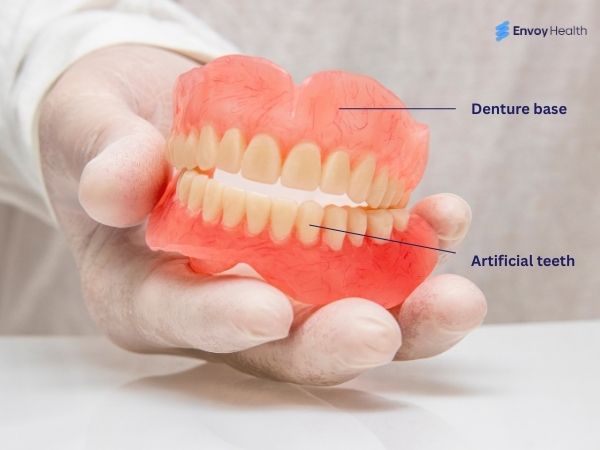
The denture base and artificial teeth are the two main parts of dentures. Depending on the type, some dentures also feature clasps (partial dentures), flanges, and implant abutment (implant-supported dentures). Below are the complete details about the main components.
Denture Base
This portion includes the base framework that sits on the gums. It comes in a pink-colored base resembling the gum portion. This portion is designed to prioritize comfort, aesthetics, and proper fit. It's because the base transmits chewing forces to the underlying structures, stimulating tissue while providing a stable base for the artificial teeth.[2]
- Acrylic resin: It is the traditional material used for crafting the denture base. The heat-cured acrylic resin, specifically polymethyl methacrylate (PMMA), offers lightweight properties and improved aesthetics. This versatility makes it a better-suited material for dental applications.[3] The material comes as powder that gets mixed with liquid to make a dough-like consistency. It is then packed into a teeth impression mold, heated, and cured to become a solid, durable base. Professionals add a color tint to PPMA to achieve an exact shade and color match with natural gums. Note that acrylic resin dentures absorb moisture and may get loose over time, requiring readjustments.
- Cobalt chrome: This is the metal framework, typically used for partial dentures. These are strong and durable, with a lightweight design that offers better comfort. These are aesthetically pleasing. However, they come with relatively higher prices. The high price is largely due to higher levels of precision and a customized fabrication process, and has little to do with the material cost. Unlike acrylic resin, these do not come loose.[4] However, some candidates may be allergic to the metal, so dental professionals need to be doubly careful when choosing materials.
Artificial Teeth
Artificial teeth are prosthetic replacements for missing teeth. These are stably held on the denture base to perform the routine activities of natural teeth. Artificial teeth are custom-made to fit and match the natural color, shade, shape, and size, and offer a proper bite. Below, we detail the common materials used for artificial teeth.
- Acrylic resin: Artificial teeth made from acrylic resin come with multiple shades and offer a better match. Acrylic resin teeth are more compatible with the acrylic resin base and do not fall out like other types of teeth. However, these are relatively softer and less sturdy than porcelain teeth.
- Porcelain: Dentures with porcelain teeth are a popular choice, mainly for their strength, durability, and aesthetics. In particular, the glass-like sheen of porcelain teeth closely resembles the natural luster of natural teeth. These are hard and cause stronger wear and tear on the teeth in the opposite jaws.
What Are Partial Dentures Made Of?
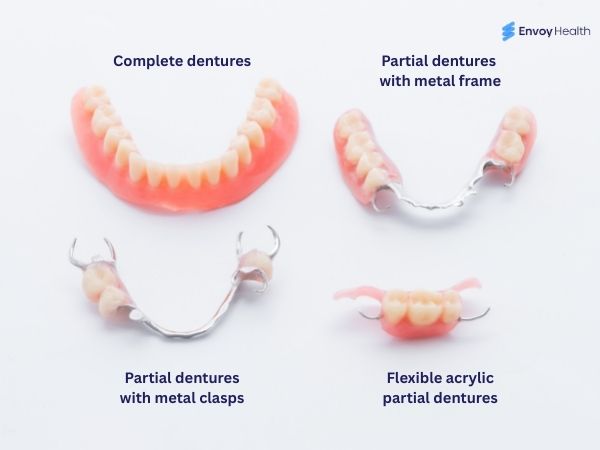
Partial dentures come with a combination of materials. These are intended to replace a few missing teeth and come with a gum base, artificial teeth, and metal clasps to hold them in place and engage nearby healthy natural teeth. Depending on the material used, partial dentures significantly vary in price, purpose, and comfort.
- Cast metal partial dentures have metal clasps and a metal base made of cobalt-chrome or titanium. These materials are known for their lightweight, strong, and durable frameworks.
- Acrylic clasp partial dentures are also known as dental flippers. These come with a pink colored plastic base that blends smoothly with the gums. The material is lightweight, offering greater levels of comfort. However, the durability is relatively low compared to the cast metal types.
- Flexible partial dentures feature a durable, lightweight denture body made of thermoplastic nylon resin. The flexible denture material offers a seamless blend with enhanced fit and comfort. With a metal-clasp-free body, they are an ideal choice for those seeking an invisible denture option. Plus, the metal-free composition makes them ideal for candidates at risk of allergy. However, durability and longevity are relatively lower than those of the other types.
How Have Denture Materials Transitioned Over Time?
Dentures have a long history. Early models were made from ivory and animal bones, and in some cases, even from the teeth of fallen soldiers, commonly known as “Waterloo dentures.” Over time, they transitioned to advanced materials to improve comfort and longevity, making dentures one of the most common dental prostheses.
What Were Dentures Made Of 50 Years Ago?
Around 50 years ago, denture fabrication began shifting toward materials that offered more flexibility and comfort. Before that, older materials like vulcanite (hardened rubber) and celluloid were commonly used. While they were considered innovative at the time, they were not always the most comfortable or natural-looking options.
Over time, these materials were replaced by acrylic resins, which enabled easier adjustments, a better fit, and improved appearance. Acrylic quickly became the preferred choice because it was lighter, more affordable, and easier to customize for each patient.
Thanks to these advancements, denture sores became less common, and overall comfort improved significantly compared to earlier generations of dentures.
What Are Dentures Made Of Today?
Modern dentures used today rely on advanced plastics and biocompatible metal alloys. Top materials include acrylic resin (polymethyl methacrylate) for denture bases, porcelain for artificial teeth, and cobalt-chrome for metal claps and frameworks. These modern materials offer:
- Precise fit
- Enhanced comfort
- Lightweight and flexibility
- Durability
- Biocompatibility and allergy-free
- Better aesthetics
- Easy adaptability
What Are The Best Dentures Made Of?
The term “best dentures” truly relies on the underlying requirement. Modern materials such as acrylic resin, cobalt chrome, and flexible nylon are widely used today. The best denture material is the one that balances comfort, cost, durability, and look. The material choice typically depends on the candidate's oral health condition and lifestyle.
For instance, candidates with metal allergies require a metal-free denture body. Others who need a sturdy denture body for a stronger bite and chew force require dentures with a metal framework. For most people, acrylic resin for dentures becomes an ideal choice for its light-weight, biocompatibility, adjustability, and affordability. While the materials vary widely, porcelain teeth are widely preferred for their durability, better stain resistance, and natural shade.
Does Denture Maintenance Vary By Material Type?
Yes, denture maintenance varies significantly by the material type. Different dental materials require different cleaning methods to prevent damage, discoloration, and structural degradation. Using inappropriate cleaning material can cause wrapping, micro-scratches, corrosion, brittleness, and bleaching. These severely compromise aesthetics and denture function, necessitating replacement of the dentures. Below, we detail the appropriate cleaning methods for various types of denture materials.
- Acrylic denture material: Requires specialized silica-free, non-abrasive toothpaste. Using the cleansing solution recommended by the denture manufactures works the best. Cleaning with hot water or a high-concentration bleach can lead to discoloration. Plus, abrasive toothpaste can cause microscratches, increasing the risk of plaque formation.
- Metal-based dentures: Generally, effervescent-type tablets are best for metal-based dentures. While these sturdy dentures withstand manual brushing, bleach-based or mineral acid-based cleansers should be avoided.
- Flexible dentures: The flexible denture materials use smoother compositions and should be handled with care. It's better to avoid complex formulations and go for manufacturer-recommended cleaning agents. Use soft or silicone-bristled toothbrushes to avoid scratches, retain their original shine and luster.
Knowing The Right Type Of Denture Material
Before treatment, it's important to arrive at the right decision about the suitable denture material. The types of dentures and cost vary significantly based on the material they are made from. Understanding the denture's strengths and weaknesses, and weighing them against your oral health needs, helps you choose the most suitable material. Below, we detail how to sort this based on your requirements.
- Seeking long-term durability: Sturdy, metal-framed dentures are better suited. Flexible nylon dentures lack strength and do not last as long as metal-based dentures.
- Looking for metal-free options: Metal-free choices, such as acrylic resin or nylon-based dentures, are better suited for candidates with metal allergies.
- Strong chew forces and an active lifestyle: Flexible nylon dentures cannot withstand strong chew forces. Opting for the other types works best when your lifestyle relies on hard foods, nuts, and crackers.
- Prioritise aesthetics: The flexible nylon and acrylic resin denture base closely resembles natural gums. The choice of porcelain teeth works better for those looking for a seamless blend.
Can Dentures Cause Heartburn?
Yes, in some cases, dentures can caue heart burn. This is particularly true for temporary removable dentures, when the old dentures become loose and worn out. Worn-out dentures lose their snug fit, making them uncomfortable to wear. Chewing and mastication of food become difficult. Incompletely chewed food takes longer to digest, increasing the risk of acid reflux. It's better to see your dentist as and when your dentures lose their fit. Treatment is easier and includes reliners and denture adjustment.
Does Denture Material Cause Allergic Reactions?
Although rare, denture-related allergies can be caused by the materials used in dentures. One of the most common causes is residual methyl methacrylate monomer, which may remain if the denture acrylic is not fully cured during processing. The other allergic-causing denture materials include the metal alloys. Denture-related allergies present as sores, burning, swelling, and rashes around the lips.
Although the incidence of allergies is low, dentists conduct patch tests and seek a clear picture of the patient's allergy history before proceeding with the denture procedure. It's best to see your dentist immediately if symptoms appear after getting a new set of dentures. An early intervention can reduce discomfort and prevent further irritation.
What Is The Biggest Problem With Dentures?
One of the biggest problems with dentures is that they don't stimulate the jawbone or help preserve it. The jawbone shrinks over time when it lacks stimulus from the natural tooth roots. Dentures simply rest on the gums rather than integrate into the jawbone, unlike implants. This peripheral positioning of dentures does not stimulate the jawbone, leading to significant loss and shrinkage over time. The old dentures loose the fit and require frequent readjustments.
How Do Full Sets Of Dentures Stay In Place?
The full denture set is held in place by strong suction. The custom fit allows for a natural seal that holds them tightly in place on the upper jaw. However, dentures fixed on the lower jaw require dental adhesives or implants to hold them tight in place. This will prevent denture slippage.
What Are Denture Tablets Made Of?
Denture tablets are the effervescent cleaning agents meant to soak and cleanse complete and partial removable dentures. Most denture tablets contain a combination of cleansing, disinfecting, and foaming agents. These start their respective action when dissolved in water. We listed the common components and their activities.
- Sodium bicarbonate: To help loosen food particles and debris.
- Citric acid: To react with bicarbonate and create a fizzing action that lifts stains.
- Sodium perborate or sodium percarbonate: To release oxygen and help whiten dentures and kill bacteria.
- Detergents or surfactants: To help break down plaque and oils on the denture surface.
- Flavoring agents: To give the solution a fresh, minty smell after cleaning.
These ingredients create effervescence when dissolved in water. This helps to clean the hard-to-reach areas, reducing the need for hard scrubbing.
Do Denture Costs Vary With Material Type?
Yes, denture costs can vary significantly depending on the materials used. Some materials are more durable, natural-looking, or comfortable, which can increase the overall cost. For example, dentures made with high-quality acrylic, flexible materials, or metal frameworks for partial dentures may cost more than basic options. Plus, the material also determines durability and the associated maintenance or replacement costs. For instance, the plastic dentures cost may seem appealing, but the durability of partial metal dentures speaks to their value. It's important to weigh their cost, durability, comfort, and better fit.
The final price can also vary with factors such as the type of denture, customization, and the complexity of the dental work required. Your dentist can help you choose a material that balances comfort, durability, appearance, and budget.
Final Word!
Dentures can be made from various types of materials, and each option has its own advantages and limitations. Factors like comfort, durability, appearance, and allergies often influence which material works best for you. By understanding what dentures are made of and how different materials perform, you can make a more informed decision about your treatment. A dentist can help guide you toward the option that best matches your oral health needs, lifestyle, and budget.
If you’re considering dentures or other dental treatments abroad, Envoy Health connects you with trusted clinics and supports you throughout the process. From flexible appointment scheduling to transport arrangements, we help make your treatment journey smoother and more comfortable. Sign up with Envoy Health to understand your options, compare clinics, and receive personalized guidance for your care.
References
- The Latest in Dentures
- Polymeric Denture Base Materials: A Review
- Prosthodontic Applications of Polymethyl Methacrylate (PMMA): An Update
- Co-Cr complete maxillary denture bases casted from conventionally waxed patterns and Co-Cr complete maxillary denture bases casted from milled wax patterns fit accuracy comparison
Ready to compare Dental Work options?
Get clinic options, pricing guidance, and recovery expectations from Envoy Health before taking the next step.
Disclaimer
The information in this article is for educational purposes only and does not replace medical advice. Always consult your doctor before starting any treatments.
Published by Envoy Health. Reviewed for patient-safety framing by Envoy Health Medical Content Review. See our editorial, AI-assistance, and medical review policy.
To request a correction, email contact@envoyhealth.io with the page URL and supporting source.
Compare reviewed clinics, pricing guidance, and recovery expectations before you commit.
The most suitable material for dentures varies with your expectations of price and comfort. Acrylic resins, cobalt-chromium metal alloys, and porcelain are the most commonly used materials nowadays. These have transitioned from more conventional choices. However, these modern-day choices are opted for their natural look, flexibility, biocompatibility, sturdiness, and longevity. Acrylic resin dentures are optimal for candidates with metal allergies. On the other hand, metallic dentures are suitable for those looking for durable options.
The pink part of the dentures is the base that rests on the gums. In most cases, it is the polymethyl methacrylate (PMMA) resin, popular for its precise fit, better comfort, and light weight. Dental professionals attain a pink color tint to match the exact shade of the natural gums for enhanced aesthetics.
Some partial dentures have a metal framework, typically made from cobalt chromium or titanium alloys. The metal portion either comes from the framework, clasps, or hooks. It offers structural strength and improved durability, with extra support by holding onto the existing teeth. Note that dentures with metal are not suitable for those with metal allergies. In these cases, acrylic resin dentures are the most suitable option.
Yes, modern dentures are made from high-quality medical-grade plastic called polymethyl methacrylate (PMMA) resin. Depending on the candidate’s dental requirements, a combination of plastic and metal alloys (cobalt chrome or titanium alloys) and plastic and porcelain (for artificial teeth) is used.
So, we partner with the premier healthcare facilities!








Send me the list