What Laser Eye Surgery Does: A Clear Guide To Better Vision

Compare Eye Surgery options before you commit
Get clinic options, pricing guidance, and recovery expectations from Envoy Health before taking the next step.
Table of contents
- What Is Laser Eye Surgery?
- What Does Laser Eye Surgery Do?
- Should You Avoid Laser Eye Surgery?
- Types of Laser Eye Surgery
- Is Laser Eye Surgery Good or Bad?
- Laser Eye Surgery Cost
- Is Laser Eye Surgery Painful?
- Is Laser Eye Surgery Safe?
- Before and After Laser Eye Surgery
- Which Laser Eye Surgery Is Best?
Key Takeaways
- Laser eye surgery aims to correct vision issues by using photodisruptive and thermal lasers. Most treatments are simple, short, and have a quick recovery.
- Candidates below 20 years, those with unstable vision, too thin cornea, severe dry eye problems, and a history of past eye trauma are not eligible.
- The changes that laser eye surgeries make on cornea are permanent. But candidates may experience slight changes in vision due to age-related changes.
Still comparing Eye Surgery options?
Envoy can help you compare reviewed clinics, pricing guidance, and recovery expectations before you make a decision.
What’s Laser Eye Surgery?
Laser eye surgery is a quick, safe procedure that uses powerful lasers to correct eye problems. The surgery aims to offer a clear vision by correcting eye issues such as nearsightedness, farsightedness, and astigmatism. Lasers are a focused beam of light with specific dimensions and the ability to perform precise cutting. Most laser procedures are to reduce the reliance on glasses and contact lenses.
The type of laser used and the action it performs vary with the underlying eye condition being treated. So the different types of laser eye surgeries exist for different eye problems. Thermal and photodisruptive lasers are more popular nowadays. Thermal lasers generate heat used to seal blood vessels and abnormal, damaged tissue in the eye. Photodisruptive lasers deliver high peak power to create precise cuts without heating or disturbing the surrounding area.
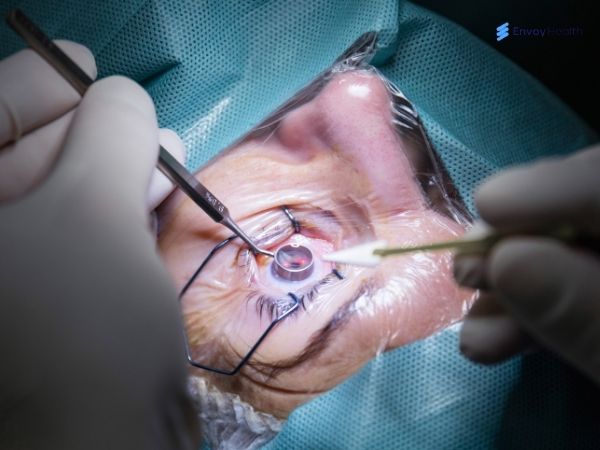
What Does Laser Eye Surgery Do: A Brief On Common Eye Problems Treated
Ophthalmologists treat various eye problems using laser eye surgery. Here is a brief gist with details of some common problems treated using lasers.
- Refractive errors: These are the most common eye problems, caused by differences in the shape of the eye's lens. As a result, the light cannot focus properly, leading to blurred or distorted vision. Lasers sculpt the cornea so that light is properly focused on the retina, and candidates will see clearly.
- Cataracts: Cataracts are an eye condition where the normal, clear lens becomes dense, thick, and cloudy due to abnormal protein aggregation. High-power, precise lasers are used to make incisions and break down the cloudy cataracts. The broken pieces are extracted using suction, and a new, clear lens (IOL) is placed to improve vision.
- Glaucoma: The condition of abnormally high blood pressure within the eye damages the optic nerve (nerves that carry visual information from the retina to the brain). With the main connection between the brain and the eye damaged, candidates cannot process visual information and may experience blindness. Lasers are used either to increase fluid drainage or to reduce fluid production, so that intraocular pressure is maintained and vision remains normal.
- Retinal detachment: The light-sensitive layer called the retina lifts or detaches, cutting off the blood supply. Candidates experience sudden floaters and flashes, and, if left untreated, these may lead to permanent blindness. Lasers are used to create small burns in a pattern. These burns form scar tissue that acts as a welding spot and prevents further detachment.
- Macular degeneration: Damage to the center of the retina, either due to damage to the central macular cells or the growth of abnormal blood vessels, causing rapid damage. The focused lasers seal or destroy leaking blood vessels under the retina. This will reduce fluid accumulation and tissue swelling, aiding in clear vision.
- Diabetic retinopathy: The condition that damages blood vessels in the retina, causing fluid leak or forms new blood vessels that break and bleed in the retina. This condition is generally caused by high blood sugar levels. Ophthalmologists use lasers to either seal the leaking blood vessels or shrink the abnormal, newly formed blood vessels.
Who Should Not Have Laser Eye Surgery?
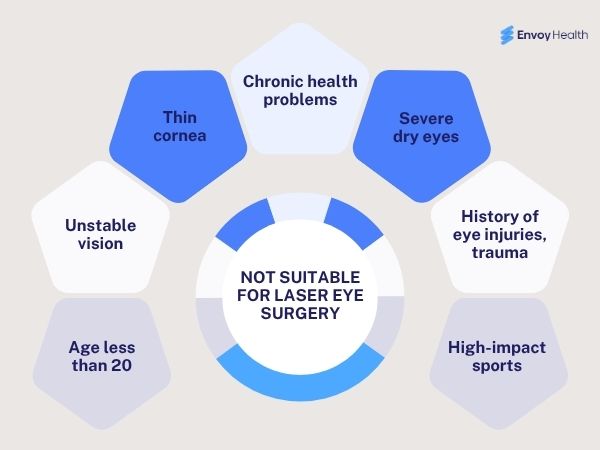
Not everyone with vision issues is a suitable candidate for laser eye surgery. Candidate selection is crucial for the success of treatment. Ophthalmologists perform a comprehensive eye examination before proceeding with the procedure. They suggest alternative treatment methods for individuals with:[1]
- Age less than 20 years
- Unstable eye vision
- Thin cornea
- Uncontrolled autoimmune conditions and diabetes
- Severe dry eye problems
- History of severe eye injuries or trauma
- Active participation in high-impact sports such as wrestling, boxing, and other martial arts
Types of Laser Eye Surgery
While LASIK, SMILE, and PRK are the common 3 types of laser eye surgery, there are a few more widely performed options. We detailed them below:
- LASIK: LASIK eye surgery, also called the laser in-situ keratomileusis, reshapes the cornea to allow the light to focus properly on the retina. It is used to correct nearsightedness, farsightedness, and astigmatism. The goal is to reduce the reliance on prescription glasses or contact lenses. Among others, the FDA-approved, advanced topography-guided LASIK technology, CONTURA Vision, is a popular choice. The highly personalized treatment creates a 3D map of the cornea for the lasers to target corneal imperfections. This reliance on advanced technology reduces common side effects of LASIK, such as halos, glare, and light sensitivity.
- SMILE: Also called the small incision lenticule extraction, is a flapless procedure. It involves removing a small lenticule from the cornea and is used to treat myopia and astigmatism. The goal is similar to that of LASIK: reducing reliance on glasses and contact lenses. However, unlike LASIK, which creates a tiny flap, SMILE is a flapless procedure.
- PRK: The photorefractive keratectomy (PRK) is a flapless alternative to LASIK. The procedure relies on surgical lasers to reshape the cornea by removing its outer layer. The goal is to reduce your dependence on glasses.
- LASEK: Laser-assisted sub-epithelial keratomileusis relies on a laser to reshape the inner corneal layers. Reshaping involves removing some corneal tissue so light is properly focused on the retina. LASEK differs from LASIK in the recovery period and timeline.
- Refractive lens exchange: This involves removing the eye’s natural lens and replacing it with an intraocular lens (IOL). Surgical lasers simplify the surgical procedure and recovery by creating microincisions, opening the lens capsule, and fragmenting the eyelens.
- Laser-blended vision: It is an advanced laser surgery to correct presbyopia and is often branded as PRESBYOND. Presbyopia is an age-related vision problem, and laser-blended vision reduces the reliance on glasses. The procedure treats both eyes by creating a blended zone or binocular vision by enhancing the depth focus of each eye. One eye is set for near or intermediate vision, and the other set for distance or far vision. Both eyes collectively form a merged, more clear image.
- SLT: Also called the selective laser trabeculoplasty, it relies on lasers to stimulate the eye’s drainage system. The lasers target specific areas of the trabecular meshwork of the eye's drainage system and improve fluid outflow. This will reduce intraocular pressure without causing permanent damage or scarring of the optic nerve.[2]
- PTK: Also called the phototherapeutic keratectomy, uses lasers to treat irregularities, scars, and superficial corneal diseases. The procedure uses lasers to precisely remove the abnormal cells and attain a smooth surface with clear corneal opacities. It is safe as the excimer lasers used do not cause any heat damage to the surrounding sensitive eye tissues.[3]
- PRP: This is also called the panretinal photocoagulation, used to treat conditions such as proliferative diabetic retinopathy and save central vision. Lasers are used to target and burn abnormal, tiny, leaky blood vessels in the peripheral retina. The primary targets are ischemic cells, and the procedure shrinks blood vessels while also reducing the production of growth factors that stimulate abnormal blood vessel growth.
Laser Treatment For Eyes Is Good Or Bad?
While this is one of the most common questions people ask, the value depends entirely on the candidate's eye condition and underlying eye problem. It's better to understand the benefits and weigh them against the cons to know whether it's good or bad.
What Are The Benefits of Laser Eye Treatment?
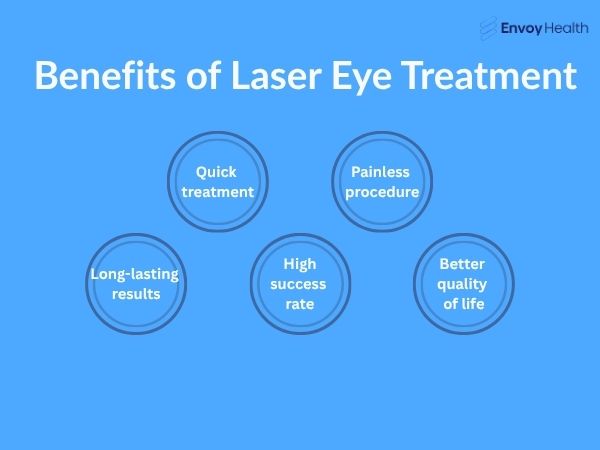
Laser eye surgeries gained popularity over the conventional surgeries mainly because of the following benefits they offer:
- Quick treatment with a smoother recovery: Laser eye surgeries are quick and rarely require an overnight hospital stay. These rely on sophisticated technology and do not require general anesthesia. So you will be awake during most of the procedures and are less likely to experience contraindications. Besides, the recovery is smoother and easier to manage because most of them rely on self-healing and do not require incisional sutures.
- Painless procedure: Laser eye surgeries rely less on physical handling. So they do not involve incisions or sutures. The procedure is simple and is carried out using local anesthesia (numbing eyedrops). While you don’t feel any pain during the procedure, you are still aware of what's happening around you.
- Long-lasting results: In most cases, the results are long-lasting. While age-related changes in vision may still occur, most patients enjoy stable vision.
- Better precision and a high success rate: Advanced lasers are highly precise and deliver predictable outcomes. The chances of errors or the procedure going wrong are very low.
- Better quality of life and convenience: With a short treatment time and simpler recovery, most candidates get back to their normal lives in no time. Noticeable vision changes are immediate. Routine activities such as reading and driving are easier in no time after laser eye treatment.
What Are The Negatives of Laser Eye Surgery?
Knowing the potential drawbacks of the choice is crucial before proceeding with any medical procedure. Here we list the disadvantages of laser eye surgery.
- Temporary side effects: While the lasers reshape the cornea or other eye tissues, they disrupt a few nerves and alter the blood circulation. Although these heal in a few days, slight temporary side effects such as halos, glare, dry eyes, and temporary light sensitivity are common.
- Strict criteria: Not everyone qualifies for laser eye surgery. It's not a better solution for candidates with specific eye conditions, unstable vision, or on prescription medication.
- High costs: Laser eye surgery costs more than conventional eye surgeries. The reliance on advanced technology offers precision and a better quality of life, but adds to treatment costs.
What Does Laser Eye Surgery Cost?
On average, laser eye surgery cost ranges between $1,500 and $4,000 in the United States. Generally, types of laser eye surgery cost vary with the procedure, technology used, and the ophthalmologist who performs it. Among others, LASIK is the most common type of laser eye surgery to correct nearsightedness, farsightedness, and astigmatism. LASIK eye surgery cost falls around $2,200 in the United States. SMILE and PRK are the other two commonly opted laser eye surgeries. These range between $2,000 and $3,000.
Laser Eye Surgery Does Insurance Cover?
Health insurance does not cover the costs of laser eye surgery, considering it a cosmetic or elective procedure. However, one can opt for employer-sponsored programs, HSA, or FSA plans to pay the costs. Vision insurance discounts can also significantly reduce treatment costs.
Is Laser Eye Surgery Painful?
No, you will not feel any pain during laser surgery. Ophthalmologists use numbing eyedrops before the procedure. This step blocks the nerve endings on the eye surface, ensuring the procedure goes painless. It also reduces your urge to blink, making the treatment experience easier. While you remain awake during the procedure, a slight sense of pressure is common.
Is Laser Eye Surgery Safe?
Laser eye surgeries are safe when they're performed on the right candidate by an appropriate expert. While the procedure itself has fewer side effects, the candidate selection, doctors' expertise, and the candidate's ability to strictly adhere to aftercare are key to treatment success. Below, we detail a few possible side effects and discomforts associated with laser eye surgery.
- Issues with the flap: A small flap is created by cutting the top layer of the cornea to access the tissues underneath. This flap is positioned back in its place and allowed to heal. Although corneal flap issues are uncommon, healing occurs normally. In rare cases, the corneal flap is at risk of dislocation. It happens in cases of rubbing or epithelial ingrowth, where a few surface cells grow below the flap surface. In either case, it leads to blurred vision.
- Delayed healing and infection: The laser cuts heal themselves and re-bond, reducing the risk of scar tissue formation. However, in rare cases, the healing may be delayed, causing discomfort. Infection can be the underlying cause of delayed healing. See your ophthalmologist when the flap fails to heal in a few days.
- Over- or undercorrection of vision: This can occur when the laser removes too much or too little corneal tissue, leading to vision problems. This leads to a residual prescription need for glasses. Generally, undercorrection occurs more often than overcorrection.
- Halos, glare, dryness, and night vision problems: While the lasers reshape the cornea and address the vision issues, they may cause slight tissue swelling and inflammation. As a result, candidates experience blurred vision, halos, glare, and night vision issues. Dryness, a more common, temporary side effect, results from the temporary severance of the corneal nerve. These side effects typically ease with recovery.
- Corneal ectasia: Although corneal ectasia following laser surgery is rare, the consequences are serious. The cornea becomes excessively thin and bulges outward, leading to worsened vision and halos.[4]
What Happens Before and After Laser Eye Surgery?
Knowing what happens before, during, and after laser eye surgery will help you stay prepared. Here we detail them.
Preparing For Laser Eye Surgery
Adopt the following measures for a positive laser eye surgery experience:
- Stop wearing contact lenses 1-4 weeks before surgery.
- Avoid eye makeup 24-48 hours before surgery, and keep your eyelashes clean.
- Refrain from using perfume, hair spray, creams, lotions, scented products, and earrings on the day of surgery.
- Arrange transport home, or have someone drive you, because self-driving can be risky due to temporary side effects after laser surgery.
After Laser Eye Surgery
The following measures after laser eye surgery will help with better recovery.
- While you may see normally, healing takes 3-5 days. Plan to take 1-2 days off work.
- Use the prescribed lubricating eyedrops to ease the temporary dryness and irritation. Ophthalmologists recommend anti-inflammatory and antibiotic eyedrops.
- Avoid eye makeup, creams, and lotions for one week after the procedure.
- Wear sunglasses to protect your eyes from strong light.
- Avoid swimming or rubbing your eyes. Wear a protective shield to prevent rubbing during sleep.
What Laser Eye Surgery Is The Best?
There is no one single best laser eye surgery. Saying that, laser surgeries themselves are a safe and effective way to address vision issues compared to other conventional procedures. However, the “best” choice depends on a personalized evaluation of the eye health. Typically, ophthalmologists consider eye health, corneal thickness, lifestyle, and vision goals in order to decide on the right one. For instance, the high LASIK eye surgery success rate does not make it a better opted procedur for every candidate. Individuals with thinner corneas or certain eye conditions may be better suited for alternatives like PRK or SMILE. This is why a thorough eye examination and personalized consultation are key to determining the most effective and safe option for long-term vision correction.
Final Word!
Laser eye surgery has become a reliable option for improving vision, offering a blend of precision, convenience, and long-term results. While the procedures are generally safe and effective, the outcomes depend heavily on choosing the right type based on individual eye health and needs. Understanding what laser eye surgery does, along with its benefits, risks, and costs, helps set realistic expectations and supports informed decision-making. Ultimately, a thorough consultation with an ophthalmologist is the best way to determine whether laser eye surgery is the right choice for clearer, more comfortable vision.
Take the next step toward clearer vision with Envoy Health. Get access to trusted clinics, transparent pricing, and personalized support throughout your laser eye surgery journey. Sign up to receive expert guidance and treatment options tailored to your needs.
References
Keep researching cataract and eye surgery
Explore the full cataract and eye surgery topic hubReady to compare Eye Surgery options?
Get clinic options, pricing guidance, and recovery expectations from Envoy Health before taking the next step.
Disclaimer
The information in this article is for educational purposes only and does not replace medical advice. Always consult your doctor before starting any treatments.
Published by Envoy Health. Reviewed for patient-safety framing by Envoy Health Medical Content Review. See our editorial, AI-assistance, and medical review policy.
To request a correction, email contact@envoyhealth.io with the page URL and supporting source.
Compare reviewed clinics, pricing guidance, and recovery expectations before you commit.
Laser surgery has a high success rate, and you can expect 20/20 vision or better. The incidence to achieve better vision depends on factors such as initial prescription, age, corneal thickness, and overall eye health. The right candidates with optimal conditions are more likely to achieve better results. However, age-related presbyopia may occur, in which candidates experience slight changes in vision with age, regardless of the success of laser eye surgery.
The changes that laser eye surgery causes in the cornea are permanent, so the vision improvement is permanent. However, the eye can still undergo slight changes in prescription due to presbyopia. Candidates may need vision enhancement treatments.
Recovery after laser eye surgery is generally short, at around 4-5 days. While you can see clearly immediately after laser eye surgery, you should use the antibiotic and lubricating eye drops. Do not rub your eyes or stress yourself with strenuous work. Reduce screen time and use a protective eye shield.
So, we partner with the premier healthcare facilities!
Send me the list