Can You Drive After a Root Canal Procedure? Here’s What To Know


Compare Dental Work options before you commit
Get clinic options, pricing guidance, and recovery expectations from Envoy Health before taking the next step.
Table of contents
Key Takeaways
- The root canal procedure is an outpatient procedure carried out under local anesthesia. Dentists use a mild sedative to provide a sense of relaxation in candidates suffering from fear and anxiety.
- Local anesthetic wears off in a few hours, but the mild effects still linger. Drowsiness, delayed responses, tingling in the arms and legs, numbed cheeks and lips, and lightheadedness can slow body coordination and reaction time.
- Wait for a few hours before driving after RCT. A wait time of 12-48 hours is ideal if a sedative is used, allowing the numbing effects to subside before a safe drive.
Still comparing Dental Work options?
Envoy can help you compare reviewed clinics, pricing guidance, and recovery expectations before you make a decision.
A Brief About the Root Canal Procedure
Root canal therapy is an endodontic procedure carried out to clean the infected tooth pulp and remove bacterial debris. Oral bacteria that naturally thrive in the mouth enter the tooth's interior, creating space in the root canals and infecting the tooth pulp and soft tissues. As a result, the pulp swells, exerting pressure on the tooth structure and causing throbbing pain that radiates through the jaw. This pain from tooth cavities becomes more intense when you bite down on food or when you eat hot or cold foods. Plus, you will notice swollen, sore, and discolored gums around the affected tooth. Severe tooth decay is also accompanied by a bad taste and smell due to the formation of pus. While home remedies can only mitigate pain to some extent, you should see your dentist upon noticing the symptoms of a tooth infection.
Endodontists are dentists who specialize in treating issues and infections of the tooth pulp and interior. They drill a hole into the tooth structure to access the tooth interior. First, they clean and disinfect the root canals, then fill them with the filling material. Dentists cover the tooth structure with a crown or a sealant to prevent reinfection of the root canal. Since root canals are narrow and small, dentists use specialized tools to clean them.[1] While treating the tooth interior may seem scary, you don’t have to worry about the pain. Dentists carry out the root canal procedure under local anaesthesia, so you don’t feel much pain during the procedure.
How Long Does a Root Canal Take?
Root canal treatment generally requires 2-3 dental appointments, each lasting 30-60 minutes. You will return home on the same day after the procedure. Each step will be performed under anesthesia, and you will not feel the pain.
While the treatment itself is straightforward, some patients may find it slightly difficult to travel or drive immediately afterward. It can be due to lingering numbness, mild soreness, or simply feeling fatigued from sitting with their mouth open for an extended period. Here comes the most commonly asked question: “Can you drive right after a root canal?” We will detail this in the upcoming section.
Can You Drive After a Root Canal and Crown?
Many patients feel comfortable driving themselves home after a root canal performed under local anesthesia. However, if your dentist uses sedation to help you stay relaxed during the procedure, the situation changes. Sedation can slow your reflexes and affect your alertness, so driving immediately afterward is generally not recommended. In such cases, it’s best to arrange for someone to accompany you or drive you home safely.
When Can You Drive a Car After a Root Canal?
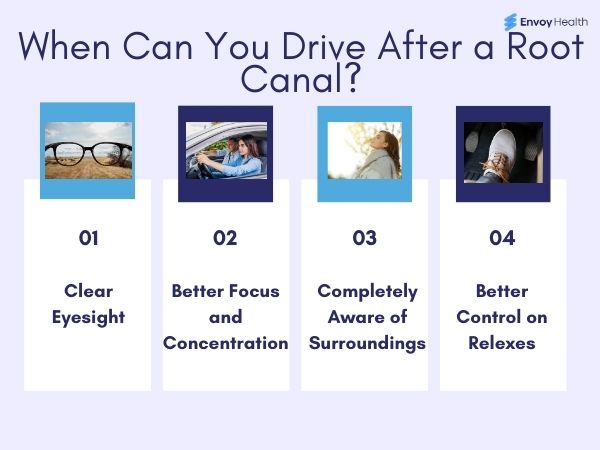
A candidate's response to local anesthesia varies significantly. A few feel comfortable, while the numbing effects still linger in a few others. It's always better to stick to your dentist’s advise while watching for the following signs. Dentists generally approve self-driving when:
- Your eyesight is clear and sharp.
- You can focus and concentrate properly.
- You feel lively and are aware of the ability to stay alert in your surroundings.
- You gained a greater range of motion and better control of the pedals and steering.
When Should You Not Drive After Root Canal Treatment?
Don’t get behind the driving wheel in case your dentist used sedation to calm down your dental anxiety before RCT. In addition, ask a friend to drive you home or use a rideshare service if you notice any of the following signs.
- Lingering numbness and tingling sensation in your arms and legs.
- A feeling of dizziness and disorientation with an inability to concentrate.
- Seeing objects hazily due to blurriness or double vision.
- Your reflexes are slow, or you experience extreme fatigue.
- You are on a painkiller dosage that may cause drowsiness.
Why Is It Dangerous to Self-Drive After a Root Canal?
Self-driving after a root canal procedure can be risky in case your anesthesia hasn’t worn off, and you still see a numbing effect. It's because your judgment, coordination, and reaction time can be slowed by the sedative effect of the drug. This will be compounded by soreness and discomfort in the gums, which may be a major distraction when driving efficiently. These increase your risk of an accident, so in order to prioritize safety, dentists advise you not to self-drive after a root canal procedure.
How Soon Can You Drive After a Root Canal?
Typically, you can drive within a few hours after root canal treatment if it's performed under local anesthesia. However, it's better to wait for 12-24 hours before self-driving if sedation has been used. Remember to refrain from driving until the drowsiness, numbness, and dizziness have worn off.
Can You Go to Work After a Root Canal?
You can get back to work as and when the local anesthesia wears off after the root canal procedure. However, it's better to take a day off if your job is strenuous or involves public speaking, as you may need to move your jaw extensively. So here we cover two commonly asked questions in this aspect.
Can You Talk After a Root Canal?
While you can speak normally after a root canal procedure, talking too much can feel a little awkward and uncomfortable. While the anesthesia wears off after the procedure, you may still feel numbness in your cheeks, lips, and chin, which can make you feel uncomfortable. Dentists recommend taking a day off if your job requires excessive talking, such as for a radio jockey or public speaker.
Can You Eat After a Root Canal?
Yes, you can eat food after a root canal procedure. But it's better to wait until the local anesthesia wears off, as it can cause accidental biting of the cheeks and tongue. Most candidates may experience soreness and swelling in their gums. Moving red, inflamed gums when eating and biting foods can cause immense discomfort. So, dentists advise eating soft foods such as mashed potatoes, yogurt, ice cream, smoothies, or scrambled eggs. Further, it's better to rely on the opposing jaw until initial healing.
What Not To Do Before a Root Canal?
Make sure you follow the steps below before planning root canal treatment.
- Avoid alcohol and tobacco 24-48 hours before the root canal procedure.
- Avoid chewing sticky and hard foods on the side of the affected tooth.
- Don’t fast and eat a full meal before leaving for the clinic, and maintain good oral hygiene.
- Avoid using certain medications, such as ibuprofen, and other anti-inflammatory drugs that affect blood clotting.
- Avoid strenuous and long night work. Get a good night's sleep and plan your travel to and from the dental clinic. Have a family member or friend by your side to help you drive home safely.
What Can’t You Do After a Root Canal?
Make sure that you avoid the following steps after root canal treatment.
- Eating hard, crunchy foods such as nuts and crackers, or sticky foods such as jellies, caramel, and jams.
- Chewing on the side of the affected tooth. Instead, go for a soft, liquid diet.
- Consuming hot or cold foods and using straws for the first 24 hours after the procedure.
- Doing strenuous physical activities and bending exercises.
- Brushing too hard may disturb the treated tooth, its filling, and sealant.
Final Word!
The root canal procedure is virtually painless because of the local anesthetic and painkiller medication used after the procedure. You can drive home a few hours after the procedure, after the local anesthetic wears off. However, you should wait 12-48 hours after using a sedative for the RCT. Waiting until the anesthetic effects subside ensures a safe drive. Drowsiness, difficulty concentrating, and slowed reflexes will make it difficult to focus on driving. Doctors recommend having a family member or friend to drive you home after the procedure.
References
Ready to compare Dental Work options?
Get clinic options, pricing guidance, and recovery expectations from Envoy Health before taking the next step.
Disclaimer
The information in this article is for educational purposes only and does not replace medical advice. Always consult your doctor before starting any treatments.
Published by Envoy Health. Reviewed for patient-safety framing by Envoy Health Medical Content Review. See our editorial, AI-assistance, and medical review policy.
To request a correction, email contact@envoyhealth.io with the page URL and supporting source.
Compare reviewed clinics, pricing guidance, and recovery expectations before you commit.
Pain after a root canal does not solely compromise your ability to drive back home. The local anesthetic can slow your reflexes, cause dizziness, and numb your arms and legs, making driving difficult. While the pain after a root canal is not too severe because of the painkiller medication, it is still unsafe to drive.
Driving immediately after a root canal procedure is not recommended, especially until the anesthesia wears off. It's always safe to wait a few hours after the procedure and get adequate rest before heading home. While driving immediately does not reverse or worsen the dental issue, it is generally not safe to drive with dizziness, numbness, or tingling.
You can drive home after a simple tooth extraction. However, waiting until the anesthesia wears off and the sedative action subsides, in case it's a surgical extraction involving sutures. It's better to wait 12-48 hours until dizziness, confusion, or delayed reflexes return to normal before driving.
So, we partner with the premier healthcare facilities!








Send me the list